Synthesized peptide derived from the C-terminal region of Human AR-α1B.
Immunogen Species
Homo sapiens (Human)
Conjugate
Non-conjugated
Isotype
IgG
Purification Method
The antibody was affinity-purified from rabbit antiserum by affinity-chromatography using epitope-specific immunogen.
Concentration
It differs from different batches. Please contact us to confirm it.
Buffer
Liquid in PBS containing 50% glycerol, 0.5% BSA and 0.02% sodium azide.
Tested Applications
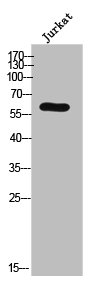
WB, IF, ELISA
Storage
Upon receipt, store at -20°C or -80°C. Avoid repeated freeze.
Lead Time
Basically, we can dispatch the products out in 1-3 working days after receiving your orders. Delivery time maybe differs from different purchasing way or location, please kindly consult your local distributors for specific delivery time.
Usage
For Research Use Only. Not for use in diagnostic or therapeutic procedures.
This alpha-adrenergic receptor mediates its action by association with G proteins that activate a phosphatidylinositol-calcium second messenger system. Its effect is mediated by G(q) and G(11) proteins. Nuclear ADRA1A-ADRA1B heterooligomers regulate phenylephrine (PE)-stimulated ERK signaling in cardiac myocytes.
Gene References into Functions
ADRA1B rs10070745 was significantly associated with vasoconstrictor responses.PMID:27089938
Receptor Species-dependent Desensitization Controls KCNQ1/KCNE1 K+ Channels as Downstream Effectors of Gq Protein-coupled Receptors.(PMID:27834678
protein kinase C modulates alpha1B-adrenergic receptor transfer to late endosomes and that Rab9 regulates this process and participates in G protein-mediated signaling turn-off.PMID:28082304
heteromeric receptor complexes between alpha1A-AR and CXCR4 and between alpha1B-AR and CXCR4 are constitutively expressed in rat and human vascular smooth muscle cells; the quaternary structure of the receptor complex is important for signaling and contractionPMID:25775528
alpha1B-AR signals through calcium, ERK1/2 and p38 only when located in the membrane and the signals disappear by membrane disruption.PMID:23717684
A rare ADRA1B haplotype composed of six single nucleotide polymorphism(SNP)s is associated with attention deficit hyperactivity disorder (ADHD).PMID:23052569
Noradrenaline facilitated cell proliferation by regulation of potassium currents in human osteoblasts via G(i/o) -protein-coupled alpha(1B) -adrenoceptors, not via coupling to Gq-proteinsPMID:23061915
Through beta-D receptor heteromers dopamine inhibits adrenergic receptor signaling and blocks the synthesis of melatonin induced by adrenergic receptor ligands.PMID:22723743
Data show that sphingosine 1-phosphate can induce alpha1B-adrenergic receptor internalization and that its autocrine/paracrine generation is relevant for internalization induced by IGF-I.PMID:22019450
alpha1b and alpha2c AR is over-expressed in basal-like breast tumours of poor prognosisPMID:21298476
The mRNA expression of alpha1b-AR subtypes in bladder detrusor and posterior urethra was significantly lower in the inflammation group than in controls.PMID:21223784
A-kinase anchoring protein (AKAP)-Lbc anchors a PKN-based signaling complex involved in alpha1-adrenergic receptor-induced p38 activation.PMID:21224381
These results are the first to demonstrate alpha1-ARs on human coronary ECs and indicate that the alpha1B subtype is predominant.PMID:20857090
the alpha(1B)-AR has differential effects on the phosphorylation status of the STAT3 pathway and may not be as prohypertrophic as the other two subtypes.PMID:12695539
heterodimerization with alpha1B-adrenergic receptors controls cell surface expression of alpha1D-adrenergic receptorsPMID:14736874
the alpha(1B)-adrenoreceptor has a role in the inhibition of migration of human aortic smooth muscle cellsPMID:15220331
alpha(1B)-adrenergic receptor expression causes a cell cycle progression and may induce transformation in sensitive cell lines.PMID:15297446
Human ureter was endowed with each alpha1 AR subtype, although alpha1D and alpha1A ARs were prevalent over alpha1B ARsPMID:15690361
These results indicate that the thio-acylation status of the alpha1b-adrenoceptor does not regulate G protein activation whereas thio-acylation of Galpha11 plays a key role in activation by the receptor.PMID:16297597
Ezrin directly interacts with the alpha1b-adrenergic receptor and plays a role in receptor recycling.PMID:16352594
the ADRA1B is able to form oligomeric rather than only simple dimeric complexes and disruption of effective oligomerization by introducing mutations into transmembrane domain IV has profound consequences for cell surface delivery and functionPMID:17220353
alpha1B-ARs are the major alpha1-AR subtype expressed in DU145, PC3, and all TRAMP cell lines, but most of the receptor is localized in intracellular compartments in a nonfunctional state, which can be rescued upon prolonged incubation with any ligand.PMID:17365508
expression in distal ureter significantly higher than in proximal and mid ureterPMID:17973108
ADRA1B expression was increased in end stage renal disease. Functional receptor changes mediated vascular hypersensitivity to phenylephrine.PMID:18257748
Pharmacological profile of alpha 1B-adrenoceptors for ketanserin is strongly influenced by the assay conditions.PMID:18336813
These findings demonstrate differences in internalization between the alpha1a- and alpha1b-AR and provide evidence that the lack of significant endocytosis of the alpha1a-AR is linked to its poor interaction with beta-arrestins as well as with AP50.PMID:18523139
Functional alpha1- and beta2-adrenergic receptors in human osteoblasts.PMID:19334040
Report alpha1A and alpha1B subtypes are both present in human myocardium, but alpha1D binding is not, and the alpha1 subtypes are not downregulated in heart failure.PMID:19919991
Show
More
Hide
All
Subcellular Location
Nucleus membrane; Multi-pass membrane protein. Cell membrane; Multi-pass membrane protein. Cytoplasm. Membrane, caveola. Note=Location at the nuclear membrane facilitates heterooligomerization and regulates ERK-mediated signaling in cardiac myocytes. signaling in cardiac myocytes. Colocalizes with GNAQ, PLCB1 as well as LAP2 at the nuclear membrane of cardiac myocytes.