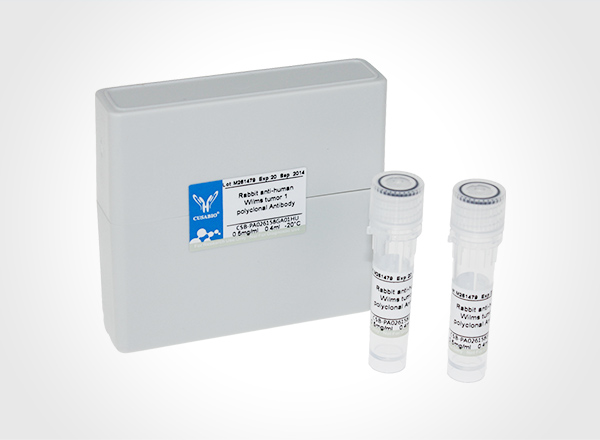
Liquid
Note: We will preferentially ship the format that we have in stock, however, if you have any special requirement for the format, please remark your requirement when placing the order, we will prepare according to your demand.
Upon receipt, store at -20°C or -80°C. Avoid repeated freeze.
Lead Time
Basically, we can dispatch the products out in 1-3 working days after receiving your orders. Delivery time maybe differs from different purchasing way or location, please kindly consult your local distributors for specific delivery time.
Note: All of our proteins are default shipped with normal blue ice packs, if you request to ship with dry ice, please communicate with us in advance and extra fees will be charged.
Usage
For Research Use Only. Not for use in diagnostic or therapeutic procedures.
Potential transcription factor. May mediate some of the neuroprotective peptide VIP-associated effects involving normal growth and cancer proliferation.
Gene References into Functions
in patients with intellectual disability, autism spectrum disorder and features suggestive of Noonan syndrome should have DNA analysis for the ADNP gene if the Noonan syndrome panel failed to identify a specific mutation.PMID:29424797
The role of ADNP in autophagy, and in autism, schizophrenia and Alzheimer's disease is described.PMID:28940660
Our findings indicate that ADNP is a tumor suppressor and promising prognostic marker, and that ketamine treatment with ADNP induction is a potential therapeutic approach that may add benefit to current treatment protocols for patients with colorectal cancerPMID:27903678
From a clinical standpoint, a differential diagnosis of patients with blepharophimosis should include ADNP mutations in addition to blepharophimosis ptosis epicanthus inversus syndrome, especially when intellectual disability is presentPMID:28407407
The parents of 44/54 ADNP-mutated children reported an almost full erupted dentition by 1 year of age, including molars and only 10 of the children had teeth within the normal developmental time range.PMID:28221363
SHANK3, CHD8, and ADNP had distinctly higher scores than all other genes in the dataset describing the genes associated with autism spectrum disorders.PMID:27790361
The study identified intratumoral heterogeneity (ITH) of the ADNP mutations in colorectal cancers, suggesting that ADNP mutations occurred during tumor progression rather than as an early event. The generation of ITH may influence on clinical outcome of the cancer patients.PMID:27308845
These findings demonstrate that the down-regulation of protein ADNP is an early pathological alteration and may contribute to dopaminergic neurodegeneration in Parkinson's diseasePMID:27003787
This review covers the myriad of important ADNP-protein interactions and glimpse at their potential meaning in autism, schizophrenia and Alzheimer's disease. [review]PMID:25955282
ADNP expression was increased in male hippocampus samples compared to female samples.PMID:25646590
Mutations in the ADNP gene cause syndromic autism.Ample evidence exists that ADNP is of key importance for proper functioning of the nBAF complex.PMID:25169753
This study showed ADNP that deregulated in postmortem hippocampal samples from schizophrenia patients, but that now showed a significantly increased expression in lymphocytes from related patients.PMID:24365867
Ten patients with autism spectrum disorders and other shared clinical characteristics, including intellectual disability and facial dysmorphisms caused by a mutation in ADNP, a transcription factor involved in the SWI/SNF remodeling complex.PMID:24531329
Chromatin immunoprecipitation demonstrates the ability of ADNP to bind to its own promoter, consistent with its action as a repressor of both promoter-supported and endogenous ADNP expression.PMID:21647709
Our results suggested that ADNP may play an important role in slowing the progression of clinical symptoms of AD.PMID:22554909
ADNP is expressed in many immune system cells. ADNP mRNA is reduced in PBMCs in MS. The peptide NAP, which plays an important role in neuroprotection, has potential immunomodulatory properties.PMID:19923857
Activity-dependent neuroprotective protein constitutes a novel element in the SWI/SNF chromatin remodeling complex.PMID:17878164
Show
More
Hide
All
Subcellular Location
Nucleus.
Tissue Specificity
Widely expressed. Strong expression in heart, skeletal muscle, kidney and placenta. In brain, expression is stronger in the cerebellum and cortex regions. No expression detected in the colon. Strong increase of expression in colon and breast cancer tissue