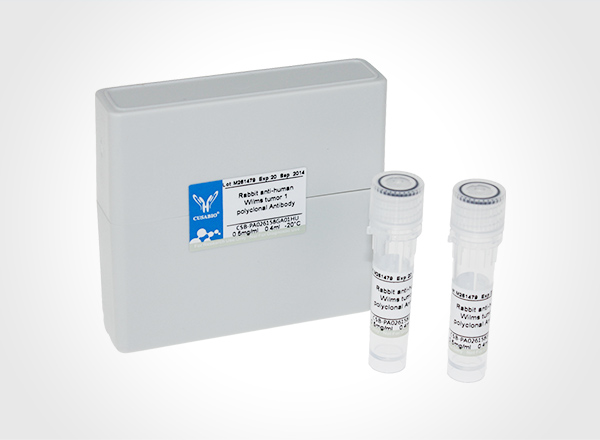
ABC34 antibody; Abcc6 antibody; Anthracycline resistance-associated protein antibody; ARA antibody; ATP binding cassette sub family C (CFTR/MRP) member 6 antibody; ATP binding cassette sub family C member 6 antibody; ATP-binding cassette sub-family C member 6 antibody; EST349056 antibody; GACI2 antibody; MLP1 antibody; MOAT E antibody; MOAT-E antibody; MOATE antibody; MRP 6 antibody; MRP6 antibody; MRP6_HUMAN antibody; Multi-specific organic anion transporter E antibody; Multidrug resistance associated protein 6 antibody; Multidrug resistance-associated protein 6 antibody; Multidrug resistance-associated protein 6, URG7 protein antibody; multispecific organic anion transporter E antibody; PXE antibody; PXE1 antibody; URG7 antibody; URG7 protein antibody
Raised in
Rabbit
Species Reactivity
Human
Immunogen
Recombinant Human Multidrug resistance-associated protein 6 protein (730-931AA)
Immunogen Species
Homo sapiens (Human)
Conjugate
HRP
Clonality
Polyclonal
Isotype
IgG
Purification Method
>95%, Protein G purified
Concentration
It differs from different batches. Please contact us to confirm it.
Liquid
Note: We will preferentially ship the format that we have in stock, however, if you have any special requirement for the format, please remark your requirement when placing the order, we will prepare according to your demand.
Upon receipt, store at -20°C or -80°C. Avoid repeated freeze.
Lead Time
Basically, we can dispatch the products out in 1-3 working days after receiving your orders. Delivery time maybe differs from different purchasing way or location, please kindly consult your local distributors for specific delivery time.
Note: All of our proteins are default shipped with normal blue ice packs, if you request to ship with dry ice, please communicate with us in advance and extra fees will be charged.
Usage
For Research Use Only. Not for use in diagnostic or therapeutic procedures.
ATP-dependent transporter of the ATP-binding cassette (ABC) family that actively extrudes physiological compounds, and xenobiotics from cells. Mediates ATP-dependent transport of glutathione conjugates such as leukotriene-c4 (LTC4) and N-ethylmaleimide S-glutathione (NEM-GS) (in vitro), and an anionic cyclopentapeptide endothelin antagonist, BQ-123. Does not appear to actively transport drugs outside the cell. Confers low levels of cellular resistance to etoposide, teniposide, anthracyclines and cisplatin.; Mediates the release of nucleoside triphosphates, predominantly ATP, into the circulation, where it is rapidly converted into AMP and the mineralization inhibitor inorganic pyrophosphate (PPi) by the ecto-enzyme ectonucleotide pyrophosphatase phosphodiesterase 1 (ENPP1), therefore playing a role in PPi homeostasis.; Inhibits TNF-alpha-mediated apoptosis through blocking one or more caspases.
Gene References into Functions
Serum levels of MRP8/MRP14 and MRP6 were up-regulated in patients with Graves' disease (GD) and Hashimoto's thyroiditis (HT). In addition, mRNA expression of MRP proteins in PBMCs and the thyroid gland was markedly elevated in these patients.PMID:29656212
High URG7 reduces the ER stress by decreasing the amount of unfolded proteins, by increasing both the total protein ubiquitination and the AKT activation and reducing Caspase 3 activation.PMID:29704455
Two compound heterozygous ABCC6 loss-of-function mutations, c.4182_4182delG (p.Lys1394Asnfs*9) and c.2900G > A (p.Trp967*), were foundPMID:29709427
Genetic analysis revealed three nonsense, four frame-shift, one exon deletion and 13 missense mutations in 73 Japanese pseudoxanthoma elasticum patients.PMID:28186352
in a French cohort with pseudoxanthoma elasticum, study identified 538 mutational events with 142 distinct variants, of which 66 were novelPMID:28102862
ABCC6 overexpression may also contribute to nilotinib and dasatinib resistance in vitro. With nilotinib and dasatinib now front line therapy options in the treatment of CML, concomitant administration of ABCC6 inhibitors may present an attractive option to enhance TKI efficacyPMID:29385210
Using an integrated pathway-based approach, we identified polymorphisms in ABCC6, ABCB1 and CYP2C8 associated with overall survival. These associations were replicated in a large independent cohort, highlighting the importance of pharmacokinetic genes as prognostic markers in Ewing sarcomaPMID:27287205
ABCC6 knockdown HepG2 cells show: 1) intracellular reductive stress; 2) cell cycle arrest in G1 phase; 3) upregulation of p21Cip p53 independent; and 4) downregulation of lamin A/C. the absence of ABCC6 profoundly changes the HepG2 phenotype, suggesting that Pseudoxanthoma elasticum syndrome is a complex metabolic disease that is not exclusively related to the absence of pyrophosphate in the bloodstream.PMID:28536638
ABCC6 deficiency can be rescued by 4-phenylbutyrate therapy in a mouse model expressing human variantsPMID:27826008
Biochemical and cell biological analyses demonstrate these mutations influence multiple steps in the biosynthetic pathway, minimally altering local domain structure but adversely impacting ABCC6 assembly and trafficking. The differential impacts on local and global protein structure are consistent with hierarchical folding and assembly of ABCC6.PMID:27994049
The results suggest that a transmembrane domain is not required for transport function and that a cytosolic loop maintains ABCC6 in a targeting-competent state for the basolateral membrane and might be involved in regulating the nucleotide binding domains.PMID:26942607
The results of this study showed that mtDNA(atp6) variants were actively involved in schizophrenia in some families with maternal inheritance of thisPMID:26822593
Pseudoxanthoma elasticum is due to mutation of the ABCC6 gene on chromosome 16.PMID:26564082
Membrane insertion and topology of the amino-terminal domain TMD0 of multidrug-resistance associated protein 6PMID:26545497
A direct relationship between reduced ABCC6 levels and the expression of pro-mineralization genes in hepatocytes.PMID:25169437
Minimal rescue of the morpholino-induced phenotype was achieved with eight of the nine mutant human ABCC6 mRNAs tested, implying pathogenicity. This study demonstrates that the Chinese PXE population harbors unique ABCC6 mutations.PMID:25615550
Virtual screening expands this possibility to explore more compounds that can interact with ABCC6, and may aid in understanding the mechanisms leading to pseudoxanthoma elasticumPMID:25062064
The increase in ABCC6 expression accompanied by the induction of cholesterol biosynthesis supposes a functional role for ABCC6 in human lipoprotein and cholesterol homeostasis.PMID:25064003
ABCC6 gene is important to determine the genotype of patients diagnosed with pseudoxanthoma elasticum.PMID:23675997
Hepatic ABCC6-mediated ATP release is the main source of circulating PPi, revealing an unanticipated role of the liver in systemic PPi homeostasis.PMID:24969777
This study describes the URG7 expression in E.coli and a structural study of it by using circular dichroism and fluorescence spectroscopy.PMID:24555429
This study showed that the expression of ABCC6 in liver is an important determinant of calcification in cardiac tissues in response to injuriesPMID:24479134
Case Report:ABCC6 mutations in pseudoxanthoma elasticum families from different ethnic backgrounds.PMID:23572048
analysis of pseudoxanthoma elasticum-causing missense mutants of ABCC6, and the correction of their mislocalization by chemical chaperone 4-phenylbutyratePMID:24352041
Our findings provide additional evidence that the ABCC6 gene product inhibits calcification under physiologic conditions and confirm a second locus for generalized arterial calcification of infancy.PMID:24008425
ABCC6 prevents ectopic mineralization seen in pseudoxanthoma elasticum by inducing cellular nucleotide release.PMID:24277820
nonsense mutations in the ABCC6 gene have a role in pseudoxanthoma elasticum and may be suppressed by PTC124PMID:23702584
The virus-mediated anti-apoptotic effect of URG7 could arise from the C-terminal cytosolic tail binding a pro-apoptotic signaling factor and retaining it to the endoplasmic reticulum membrane.PMID:23912081
ABCC6 is in the basolateral membrane, mediating the sinusoidal efflux of a metabolite from the hepatocytes to systemic circulation.PMID:23625951
Mutations in the underlying disease genes ENPP1, ABCC6, NT5E, and SLC20A2, respectively, lead to arterial media calcification.PMID:23122642
The expression pattern of ABCC6P2 in 39 human tissues was highly similar to that of ABCC6 and ABCC6P1 suggesting similar regulatory mechanisms for ABCC6 and its pseudogenes.PMID:22873774
We identified three DNase I hypersensitive sites (HSs) specific to cell lines expressing ABCC6.PMID:22763786
ABCC6 mutations accounted for a significant subset of generalized arterial calcification of infancy patients, and ENPP1 mutations could also be associated with pseudoxanthoma elasticum lesions in school-aged children.PMID:22209248
The heterozygosity for ABCC6 R1141X did not associate with risk of ischemic heart disease, myocardial infarction, ischemic cerebrovascular disease, or ischemic stroke.PMID:21831958
These results show that VK3GS is not the essential metabolite transported by ABCC6 from the liver and preventing the symptoms of pseudoxanthoma elasticum.PMID:22056557
The nucleotide-binding domain 2 of the human transporter protein MRP6.PMID:21748403
Angioid streaks in pseudoxanthoma elasticum are associated with the p.R1268Q mutation in the ABCC6 gene.PMID:21179111
regulatory pathway of ABCC6 expression showing that the ERK1/2-HNF4alpha axis has an important role in regulation of the genePMID:20463007
The R1141X loss-of-function mutation of the ABCC6 gene is a strong genetic risk factor for coronary artery disease.PMID:19929409
Nine novel deletion mutations in ABCC6 cause pseudoxanthoma elasticum.PMID:20075945
The classic forms of pseudoxanthoma elasticum are due to loss-of-function mutations in the ABCC6 gene, which encodes ABCC6, a transmembrane efflux transporter expressed primarily in the liverPMID:20032990
Studies show that individuals homozygous for the c.3775delT mutation in the ABCC6 gene can have a highly variable phenotype.PMID:19904211
Loss of ATP-dependent transport activity in pseudoxanthoma elasticum-associated mutants of human ABCC6 (MRP6).PMID:11880368
Presence of the R1141X mutation in the ABCC6 gene is associated with a sharply increased risk of premature coronary artery diseasePMID:12176944
We suggest that the severity of the Pseudoxanthoma elasticum phenotype is not directly correlated with the level of ABCC6/MRP6 activity.PMID:12673275
A specific founder effect for the R1141X mutation exists in Dutch patients with PXE (pseudoxanthoma elasticum).PMID:12714611
Using linkage analysis and mutation detection techniques, mutations in the ABCC6 gene were recently implicated in the etiology of pseudoxanthoma elasticum.PMID:12850230
Asn15, which is located in the extracellular N-terminal region of human ABCC6, is the only N-glycosylation site in this protein.PMID:12901863
Twenty-three different mutations were identified, among which 11 were new, in Italian patients with pseudoxanthoma elasticumPMID:15459974