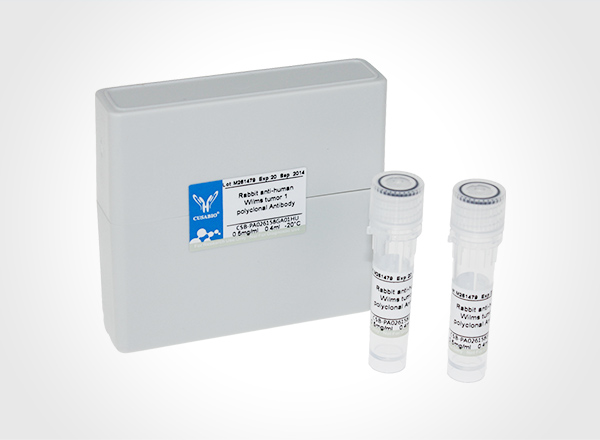
ABCC 4 antibody; ABCC4 antibody; ATP binding cassette sub family C (CFTR/MRP) member 4 antibody; ATP binding cassette sub family C member 4 antibody; ATP-binding cassette sub-family C member 4 antibody; bA464I2.1 (ATP binding cassette; sub-family C (CFTR/MRP) member 4) antibody; bA464I2.1 antibody; Canalicular multispecific organic anion transporter antibody; Canalicular multispecific organic anion transporter ABC superfamily antibody; EST170205 antibody; MOAT B antibody; MOAT-B antibody; MOATB antibody; MRP 4 antibody; MRP/cMOAT related ABC transporter antibody; MRP/cMOAT-related ABC transporter antibody; MRP4_HUMAN antibody; Multi specific organic anion transporter B antibody; Multi-specific organic anion transporter B antibody; Multidrug resistance associated protein 4 antibody; Multidrug resistance-associated protein 4 antibody; OTTHUMP00000018560 antibody
Raised in
Rabbit
Species Reactivity
Human,Mouse,Rat
Immunogen
Recombinant protein of Human ABCC4
Immunogen Species
Homo sapiens (Human)
Isotype
IgG
Purification Method
Affinity purification
Concentration
It differs from different batches. Please contact us to confirm it.
Buffer
Store at -20oC or -80oC. Avoid freeze / thaw cycles. Buffer: PBS with 0.02% sodium azide, 50% glycerol, pH7.3.
Form
Liquid
Note: We will preferentially ship the format that we have in stock, however, if you have any special requirement for the format, please remark your requirement when placing the order, we will prepare according to your demand.
Upon receipt, store at -20°C or -80°C. Avoid repeated freeze.
Lead Time
Basically, we can dispatch the products out in 1-3 working days after receiving your orders. Delivery time maybe differs from different purchasing way or location, please kindly consult your local distributors for specific delivery time.
Note: All of our proteins are default shipped with normal blue ice packs, if you request to ship with dry ice, please communicate with us in advance and extra fees will be charged.
Usage
For Research Use Only. Not for use in diagnostic or therapeutic procedures.
ATP-dependent transporter of the ATP-binding cassette (ABC) family that actively extrudes physiological compounds and xenobiotics from cells. Transports a range of endogenous molecules that have a key role in cellular communication and signaling, including cyclic nucleotides such as cyclic AMP (cAMP) and cyclic GMP (cGMP), bile acids, steroid conjugates, urate, and prostaglandins. Mediates the ATP-dependent efflux of glutathione conjugates such as leukotriene C4 (LTC4) and leukotriene B4 (LTB4) too. The presence of GSH is necessary for the ATP-dependent transport of LTB4, whereas GSH is not required for the transport of LTC4. Mediates the cotransport of bile acids with reduced glutathione (GSH). Transports a wide range of drugs and their metabolites, including anticancer, antiviral and antibiotics molecules. Confers resistance to anticancer agents such as methotrexate.
Gene References into Functions
Data show that forkhead box protein M1 (FoxM1) enhanced carboplatin resistance in Y-79CR cells through directly up-regulating the transcription of ATP-binding cassette transporter C4 (ABCC4).PMID:30060118
MRP4 is mainly responsible for the efflux of lamivudine and entecavir in hepatocyte cultures.PMID:29568871
Data suggest that targeting the ATP binding cassette subfamily C member 4 (ABCC4)-membrane palmitoylated protein 1 (MPP1) protein complex can lead to new therapies to improve treatment outcome of acute myeloid leukemia (AML).PMID:29146910
A functional polymorphism in the ABCC4 promoter, -1508A>G, may increase extracellular 15-hydroxyeicosatetraenoic acid, sphingosine-1-phosphate, and periostin levels, contributing to airway inflammation in asthmatics.PMID:28659663
MRP4 localisation and function are regulated by interactions with SNX27, PSD95, and AP3B1.PMID:27761583
MRP4 exports prostaglandin E2 PGE2 and contributes to cell migration/metastasis in basal/triple negative breast cancer cells.PMID:28029661
This study provides direct evidence that ganciclovir (GCV) is a substrate of the efflux transporter MRP4 and suggests that the intracellular fate of GCV is significantly influenced by ABCC4 rs11568658 variant in renal transplant recipients receiving GCVPMID:27402191
Multidrug resistance protein 4 (MRP4) is a critical protein associated with the antiviral efficacy of nucleos(t)ide analogue (NA)s, and combination therapy of NA and MRP inhibitors could reduce the dosage for long-term NA use. MRP4 expression is an important factor predicting treatment failure in chronic hepatitis B patients and will provide a potential therapeutic target against hepatitis B virus.PMID:26931636
All patients with both NUDT15 rs116855232 heterozygous variants and ABCC4 rs3765534 variants suffered from severe leukopenia and required 6-mercaptopurine dose reduction to less than 35 mg/m(2)/daPMID:28883280
ABCC4 variant (rs4148500) was significantly associated with hyperuricemia and gout. The gout risk allele was associated with fractional excretion of uric acid in male individuals.PMID:28371506
ABCC4 functional SNP in the 3' splice acceptor site of exon 8 (G912T) is associated with unfavorable clinical outcome in children with acute lymphoblastic leukemiaPMID:28550450
Data suggest that common SNPs in MRP4/ABCC4 (evaluated here via site-directed mutagenesis in recombinant proteins expressed in kidney cell lines) are responsible for variations in transport of methylated arsenic metabolites (major urinary arsenic metabolites in humans), prostaglandin E2, and estradiol-17 beta-glucuronide.PMID:27659809
Data indicate that R-flurbiprofen inhibits multidrug resistance-associated protein 4 (MRP4, ABCC4)-mediated prostaglandins (PG) transport.PMID:28042832
Analysis of gene-gene interactions with CYP2B6 was particularly useful to reinforce the role of MRP4 and to reveal unknown associations, such as that of DRD3.PMID:27665700
The tagSNP ABCC4 rs17268122 appears to be a prognostic factor in locally advanced rectal cancer treated with neoadjuvant chemoradiotherapy (nCRT) and surgery, independently of response to nCRTPMID:28011504
ABCC4 plays a protective role against cytarabine-mediated insults in leukemic and host myeloid cells.PMID:26842729
Results demonstrated the capacity of MRP4 to confer resistance to arsenite (AsIII), as evidenced by cell survival assays when treated with AsIII in the presence or absence of its two differential inhibitors.PMID:26497925
Osteoarthritis patient platelets presented a higher expression of MRP4.PMID:26141932
Sulfate metabolites R-6-S and R-4'-S were generated from raloxifene in SULT293 expression HEK293 cells. Cellular excretion of the raloxifene sulfates was mainly mediated by BCRP and MRP4.PMID:26611713
the specific COX-2 inhibitor meloxicam can increase the intracellular accumulation of doxorubicin and enhance doxorubicin-induced cytotoxicity in A549 cancer cells by reducing the expression of MRP1 and MRP4.PMID:26600514
MRP4 overexpression is important to reduce aspirin-selective cell deathPMID:26491233
Approximately 20% of HIV-infected patients receiving tenofovir showed beta2-microglobulinuria. The C allele at position 4976 of the ABCC4 gene was associated with beta2-microglobulinuria in this population.PMID:26807589
MRP4 genotyping may be useful for personalizing the therapeutic dose of 6-mercaptopurine during the acute lymphoblastic leukemia maintenance therapy in JapanesePMID:25403995
Genetic variability in ABCC4 may contribute to misoprostol-induced fever in pregnant womenPMID:26122863
ABCC4 levels were significantly upregulated both in human NK/T-cell lymphoma YTS and SNK-6 cells. ABCC4 overexpression induced chemotherapy resistance to epirubicin and cisplatin in YTS cells, and inhibited apoptosis.PMID:26499190
These findings have important clinical implications because they directly highlight an important relationship between ABCC4 transporter function and phosphodiesterases in accounting for the cAMP-directed activity of antithrombotic agents.PMID:26405223
Data show the influence of ABCC2 and ABCC4 polymorphisms on tenofovir plasma concentrations in Thai HIV-infected patientsPMID:25801567
This study aimed to establish SULT1A3 stably transfected HEK293 cells, and to determine the contributions of BCRP and MRP transporters to excretion of chrysin and apigenin sulfates.PMID:26291395
The overexpression of MRP4 is related to multidrug resistance in osteosarcoma cellsPMID:25879330
Multiple drug resistance-associated protein 4 (MRP4), prostaglandin transporter (PGT), and 15-hydroxyprostaglandin dehydrogenase (15-PGDH) as determinants of PGE2 levels in cancer.PMID:25433169
These results suggest that eicosapentaenoic acid-derived prostaglandin PGE3, PGF(3alpha), and thromboxane B3 are substrates of ABCC4 and ABCC4 partially contributes to the release of PGE3 and PGF(3alpha).PMID:25275481
Similar molecular features between MRP4 and BSEP inhibitors may partially explain why various drugs have affinity for both transporters.PMID:25735837
inhibition of ABCC4 gene expression can inhibit the proliferation of multidrug-resistant gastric cancer cells and can enhance gastric cancer cell sensitivity to chemotherapeutic drugs.PMID:25572969
Our result indicates that GSTP1rs1695 polymorphism was strongly associated with the response of chemotherapy, whereas ABCC4rs9561778 polymorphism was significantly related with chemotherapy-induced toxicities.PMID:25677905
The blockade of ABC transporter MRP4 could help to improve drug effectiveness, reduce tumour growth and prevent recurrence in glioblastoma multiforme.PMID:25028266
SNPs most associated with Chemotherapy-induced peripheral neuropathy were in glutathione peroxidase 7 (GPX7) gene.PMID:25586538
Influence of PTGS1, PTGFR, and MRP4 genetic variants on intraocular pressure response to latanoprost in Chinese primary open-angle glaucoma patientsPMID:25339146
MRP4/ABCC4 has a relevant role in tumor growth and apoptosis and in the eradication of leukemic stem cells, providing the basis for a novel promising target in acute myeloid leukemia therapy.PMID:25301721
Upregulation of COX-2 in lung cancer promotes overexpression of MRP4 via PGE2-dependent pathwayPMID:24909729
Hepatically derived enalaprilat is excreted across the hepatic basolateral membrane by MRP4.PMID:24958844
Multi-walled carbon nanotubes may act on c-Myc to down-regulate ABCB1/ABCC4 expression.PMID:25461681
Genetic variability in key genes in prostaglandin E2 pathway (COX-2, HPGD, ABCC4 and SLCO2A1) and their involvement in colorectal cancer development.PMID:24694755
study suggests that ABCC4 serves as a novel predictive biomarker that is responsible for the radioresistance and predicts a poor prognosis for locally advanced rectal carcinoma after neoadjuvant radiotherapyPMID:24454870
Knockdown of ABCC4 blocked the cell cycle progression in MGC80-3 gastric cancer cells.PMID:24606721
ABCC4 activates oncogenic pathways in esophageal squamous cell carcinoma and facilitates cancer cell development and progression.PMID:24510239
Human MRP4 could be a major player in the elimination of arsenic.PMID:24870404
NHERF3 is a key regulator of organic transport in the kidney, particularly MRP4-mediated clearance of drug molecules.PMID:24436471
These results suggest that in epithelial ovarian cancer, ABCC1/MRP1 may be a marker for aggressiveness because its expression was associated with tumor grade and support that ABCC4/MRP4 may play an unfavourable role in disease outcome.PMID:24024181