Recombinant Mouse Tumor necrosis factor receptor superfamily member 5 (Cd40), partial (Active)

In Stock
Code: CSB-MP004936MO1
Size:
20ug
20ug100ug1mg
US$138
Quantity:
Express system: Mammalian cell
Species: Mus musculus (Mouse)
Tag Info: C-terminal hFc-tagged
For inquiries on large quantities or another requirements
Send an Inquiry
Start an on-line Chat
Online ordering is currently available for U.S. customers only. For orders outside the U.S., please kindly submit an inquiry or start a chat with us.

Product Details

Abbreviation
Recombinant Mouse Cd40 protein, partial (Active)
Purity
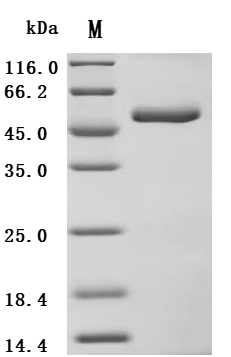
Greater than 95% as determined by SDS-PAGE.
Endotoxin
Less than 1.0 EU/ug as determined by LAL method.
Activity
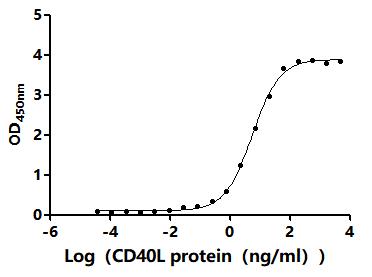
Measured by its binding ability in a functional ELISA.Immobilized Mouse Cd40 at 2 μg/mL can bind Mouse Cd40lg(CSB-MP004937MO1).The EC50 is 5.121-6.085 ng/mL.
Target Names
Cd40
Uniprot NO.
Alternative Names
Tumor necrosis factor receptor superfamily member 5; B-cell surface antigen CD40; Bp50; CD40L receptor; CD40; Cd40; Tnfrsf5
Species
Mus musculus (Mouse)
Source
Mammalian cell
Expression Region
20-193aa
Target Protein Sequence
LGQCVTCSDKQYLHDGQCCDLCQPGSRLTSHCTALEKTQCHPCDSGEFSAQWNREIRCHQHRHCEPNQGLRVKKEGTAESDTVCTCKEGQHCTSKDCEACAQHTPCIPGFGVMEMATETTDTVCHPCPVGFFSNQSSLFEKCYPWTSCEDKNLEVLQKGTSQTNVICGLKSRMR
Note: The complete sequence may include tag sequence, target protein sequence, linker sequence and extra sequence that is translated with the protein sequence for the purpose(s) of secretion, stability, solubility, etc.
If the exact amino acid sequence of this recombinant protein is critical to your application, please explicitly request the full and complete sequence of this protein before ordering.
Mol. Weight
46.8 kDa
Protein Length
Partial
Tag Info
C-terminal hFc-tagged
The tag type will be determined during production process. If you have specified tag type, please tell us and we will develop the specified tag preferentially.
Buffer
Lyophilized from a 0.2 μm sterile filtered PBS, 6% Trehalose, pH 7.4
Storage
Store at -20°C/-81°C upon receipt, aliquoting is necessary for mutiple use. Avoid repeated freeze-thaw cycles.
Lead Time
3-7 business days
Note: All of our proteins are default shipped with normal blue ice packs, if you request to ship with dry ice, please communicate with us in advance and extra fees will be charged.
Notes
Repeated freezing and thawing is not recommended. Store working aliquots at 4°C for up to one week.
Shelf Life
The shelf life is related to many factors, storage state, storage temperature and the stability of the product itself. Generally, the shelf life of lyophilized form is 6 months at -20°C/-80°C from the date of receipt.
Troubleshooting and FAQs
Datasheet & COA
Please contact us to get it.
Images
  • (Tris-Glycine gel) Discontinuous SDS-PAGE (reduced) with 5% enrichment gel and 15% separation gel.
  • Activity
    Measured by its binding ability in a functional ELISA.Immobilized Mouse Cd40 at 2 μg/ml can bind Mouse Cd40lg(CSB-MP004937MO1).The EC50 is 5.121-6.085 ng/mL.
Description

CD40 signaling drives critical co-stimulatory pathways in B cells, dendritic cells, and macrophages, making this receptor a central node in adaptive immunity and a validated target in cancer immunotherapy and autoimmune disease research. This mammalian-expressed construct spanning residues 20–193 captures the complete extracellular ligand-binding domain and demonstrates quantifiable binding to mouse CD40LG with an EC50 of 5.1–6.1 ng/mL in functional ELISA, providing a validated reagent for ligand-receptor interaction studies, competitive inhibition assays, and blocking antibody screening campaigns. The measured affinity supports use in surface plasmon resonance and biolayer interferometry experiments for therapeutic antibody epitope mapping, as well as small-molecule or biologic inhibitor screening in drug discovery workflows targeting the CD40–CD40L axis. Purity exceeding 95% by SDS-PAGE and endotoxin levels below 1.0 EU/μg align with standards expected in functional binding assays and cell-based co-stimulation studies.


Customer Reviews and Q&A

 Customer Reviews

Target Background

Function(From Uniprot)
Receptor for TNFSF5/CD40LG. Transduces TRAF6- and MAP3K8-mediated signals that activate ERK in macrophages and B cells, leading to induction of immunoglobulin secretion.
Gene References into Functions
  1. these studies identify a PPARgamma-dependent miR-424/503-CD40 signaling axis that is critical for regulation of inflammation mediated angiogenesis PMID:28566713
  2. Data indicate a CD40-dependent mechanism capable of abrogating receptor-related orphan gammat(+) (RORgammat(+)) Helios(-)-induced Treg (iTreg) cells induction by CD103(+) dendritic cells (DCs). PMID:28276457
  3. Although either BCR or CD40 ligation induced c-Myc in naive B cells, both signals were required to highly induce c-Myc, a critical mediator of GC B cell survival and cell cycle reentry. PMID:29396161
  4. These results suggest that CD40-activated CD40L reverse signalling has striking and opposite effects on the growth and elaboration of dendrites among major classes of brain neurons by PKC-dependent mechanisms. PMID:29111976
  5. Results suggest that platelet CD40 plays a pivotal role in neointima formation after arterial injury PMID:29037856
  6. CD73 expression identifies a subset of IgM(+) antigen-experienced cells with memory attributes that is T cell and CD40 signalling dependent PMID:28746783
  7. CD40 silencing with a specific siRNA ameliorates progression of experimental atherosclerosis in ApoE(-/-) mice via NF-kappaB/miR-125b signaling axis. PMID:27835742
  8. CD40 functions as a non-redundant mechanism to convert the tumor microenvironment immunologically. PMID:27292635
  9. CD40 plays a critical role in the pathogenesis of type 1 diabetes, influencing lymphocyte trafficking, T-cell receptor expression, and T-cell pathogenesis. PMID:28542921
  10. role with b7 in primary germinal center generation of distinct antigen-presenting cells PMID:28768709
  11. CD40 signaling in adipose tissue macrophages regulates major histocompatibility complex class II and CD86 expression to control the expansion of CD4(+) T cells. PMID:26658005
  12. Adoptively transferred Th40 cells (CD4+CD40+ Tcells) are present in lesions in the CNS and are associated with wide spread demyelination. PMID:28192476
  13. this study reports that anti-CD40 mAb administration <3 d in advance of chemotherapy is lethal in more than half of treated C57BL/6 mice in pancreatic cancer model PMID:27217585
  14. The data show that CD40-mediated inhibition of PC generation is via engagement of multiple pathway and constitutive CD40 signaling in vivo involving bystander T-B interactions can calibrate B cell differentiation outcomes PMID:27342845
  15. BAFF upregulates CD28/B7 and CD40/CD154 expression, and promotes the interactions between T and B cells in a BAFF-R-dependent manner PMID:27180986
  16. CD40 in Muller cells is sufficient to upregulate retinal inflammatory markers and appears to promote experimental diabetic retinopathy and that Muller cells orchestrate inflammatory responses in myeloid cells through a CD40-ATP-P2X7 pathway. PMID:27474370
  17. Taken together, our data demonstrate the importance of CD40 signaling in the conversion of CTL exhaustion and its ability to enhance PD-1 antagonist action in rescuing exhausted CTLs in chronic infection. PMID:28153727
  18. Upon miR-155 overexpression, Cd40 expression was significantly upregulated with a negative correlation to the miR-155 primary target Ship1 expression in mice. PMID:27509492
  19. These results suggest that Il23a expression in DCs is synergistically triggered by the PG E2-EP4-cAMP-PKA pathway and canonical/non-canonical NF-kappaB pathways and CREB activated by CD40 stimulation. PMID:26189370
  20. Results suggest that altered CD40 signaling and granulocyte recruitment in response to infection are responsible for the Ity5-associated Salmonella susceptibility of A/J mice. PMID:26562079
  21. our results highlight new roles for CD40 and cysteine-238-mediated CD40 homodimers in cell biology and identify a potential new target for therapeutic strategies against CD40-associated chronic inflammatory diseases. PMID:25977307
  22. Latent virus infection upregulates CD40 expression facilitating enhanced autoimmunity in a model of multiple sclerosis PMID:26356194
  23. Platelet CD40 plays a crucial role in inflammation by stimulating leukocyte activation and recruitment and activation of endothelial cells, thereby promoting atherosclerosis. PMID:26821950
  24. there is a major involvement of the CD40-CD40L signaling pathway in long-term brain dysfunction in an animal model of sepsis. PMID:25822797
  25. NIK, and thus probably the noncanonical NF-kappaB pathway, is critical to allow DCs to acquire the capacity to cross-present antigen and prime CD8 T cells after exposure to licensing stimuli. PMID:26561586
  26. C57-CD40L(-/-) mouse is a useful surrogate model of X-HIGM syndrome for studying immune responses elicited against pathogens PMID:26064940
  27. although treated CD40 knockout mice remained healed, developed long-term immunity, and were resistant to secondary Leishmania major challenge, treated CD40L knockout reactivated their lesion after cessation of rIL-12 treatment. PMID:26304989
  28. Anti-OX40L mAb could prolong secondary heart allograft survival based on CD40/CD40L and LFA-1/ICAM-1 blockade. PMID:25613092
  29. CD40 on lymph node fibroblasts facilitated bidirectional communication with CD4(+) T cells via CD40-CD40L, thereby altering fibroblast gene expression of immune regulatory molecules. PMID:25856408
  30. CD40L mediates neointima formation via its classic receptor CD40 rather than via its recently described novel interaction with Mac-1. PMID:24652469
  31. p62 regulates CD40-mediated NF-kappaB activation in macrophages through interaction with TRAF6. PMID:26133577
  32. Although LIGHT is critical for maintenance of primary Th1 response, it is dispensable during secondary anti-Leishmania immunity in the presence of functional CD40 signaling. PMID:26026056
  33. Velcro" engineering of high affinity CD47 ectodomain as signal regulatory protein alpha (SIRPalpha) antagonists that enhance antibody-dependent cellular phagocytosis PMID:25837251
  34. findings indicate that in a setting of acute hepatitis, tumor-induced hepatic myeloid-derived suppressor cel act as proinflammatory immune effector cells capable of killing hepatocytes in a CD40-dependent manner. PMID:25616156
  35. These data reveal the L. major-enhanced CD40-induced N-Ras activation as a novel immune evasion strategy and the potential for Ras isoform-targeted antileishmanial immunotherapy and immunoprophylaxis. PMID:25786685
  36. Data indicate a role of scaffold protein JLP in the bridging of CD40 antigen internalization and CD40-dependent signaling in B lymphocytes. PMID:25586186
  37. CD40 is required for protective immunity against liver stage Plasmodium infection. PMID:25646303
  38. demonstrates that the simultaneous silencing of CD40 and CD80 genes has synergistic effects in preventing allograft rejection, and may therefore have therapeutic potential in clinical transplantation PMID:24886282
  39. an SHP-1-centered feedback system wherein SHP-1 modulates CD40-induced p38MAPK activation threshold and reciprocal ERK-1/2 activation, establishing itself as a critical regulator of CD40 signaling reciprocity PMID:25187664
  40. results imply that any setting of T cell lymphopenia or reduced CD40 function, including B cell recovery following transplantation, will impact the naive B cell repertoire PMID:25172502
  41. These results indicate that CD40 plays distinct roles in different tissues and, unexpectedly, plays an important role in maintaining immune homeostasis in epididymal adipose tissue. PMID:24647739
  42. CD40 signaling activates naive B cells to a phenotype that is intermediate between the naive and plasma cell stages of the B cell differentiation. PMID:24482285
  43. gammadelta T cells might activate dendritic cells via CD40 signalling during infection. Dendritic cell activation via gammadelta T cells expressing CD40 ligand is critical during the early phase of infection with Plasmodium berghei XAT. PMID:24815981
  44. We present the surprising finding that CD40 deficiency on T cells aggravates whereas activation of CD40 signaling improves adipose tissue inflammation and its metabolic complications. PMID:24664276
  45. Fas signals act as a silencing mechanism for CD40-induced RAGs and prevent CD40 translocation to the nucleus. PMID:24037181
  46. Data indicate that CD40-CD154 interactions drive the functional activation of steady-state dendritic cells. PMID:24420080
  47. Data indicate that CD40 stimulation enhanced only TLR-9 expression. PMID:24387292
  48. Data suggest that simultaneous knock-down of CD40 and IL-23p19 production by bone marrow-derived DCs (BMDCs) may represent a therapeutic tool for the treatment of IL-17-dependent autoimmune diseases, including multiple sclerosis. PMID:24387596
  49. CD40 plays a crucial role as an important costimulatory molecule in experimental autoimmune neuritis. PMID:24709684
  50. The CD40/CD40L-assisted crosstalk between mesenchymal stromal cells and mast cells in the splenic marginal zone lymphoma (SMZL) microenvironment finds correlation in p53(-/-) mice developing SMZL. PMID:24452203

Show More

Hide All

Subcellular Location
[Isoform I]: Cell membrane; Single-pass type I membrane protein.; [Isoform III]: Cell membrane; Single-pass type I membrane protein.; [Isoform IV]: Cell membrane; Single-pass type I membrane protein.; [Isoform V]: Cell membrane; Single-pass type I membrane protein.; [Isoform II]: Secreted.
Database Links
icon of phone
Call us
301-363-4651 (Available 9 a.m. to 5 p.m. CST from Monday to Friday)
icon of address
Address
No. 269, Shendun 5th Road, Donghu Hi-Tech Development Area, Hubei Province, 430206, P.R.China
icon of social media
Join us with

Subscribe newsletter

Leave a message

* To protect against spam, please pass the CAPTCHA test below.
CAPTCHA verification
© 2007-2025 CUSABIO TECHNOLOGY LLC All rights reserved. 鄂ICP备15011166号-1
Select 0 Products