Recombinant Macaca fascicularis Angiotensin-converting enzyme (ACE2), partial (Active)

CSB-MP3414MOV
Size:
20ug
20ug100ug1mg
US$190
Quantity:
Express system: Mammalian cell
Species: Macaca fascicularis (Crab-eating macaque) (Cynomolgus monkey)
Tag Info: C-terminal hFc1-tagged
For inquiries on large quantities or another requirements
Send an Inquiry
Start an on-line Chat
Orders can only be placed from within the U.S.
Promotion

Product Details

Purity
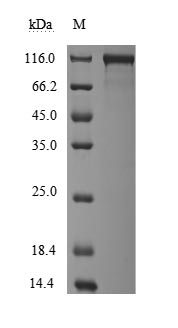
Greater than 90% as determined by SDS-PAGE.
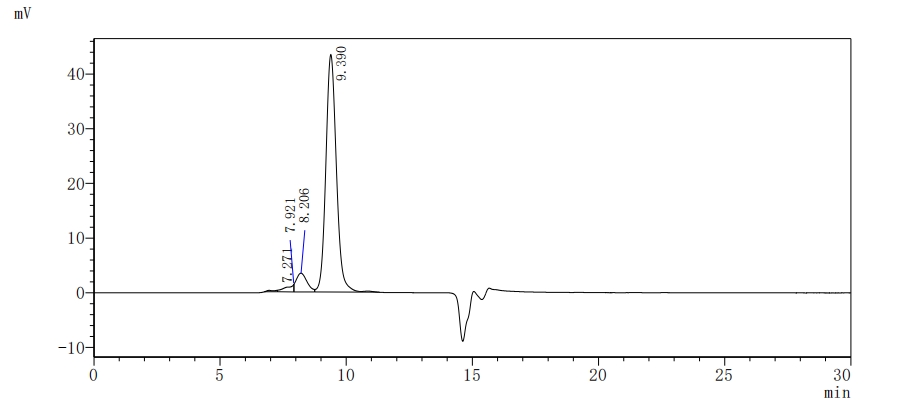
Greater than 90% as determined by SEC-HPLC.
Endotoxin

Less than 1.0 EU/ug as determined by LAL method.

Activity
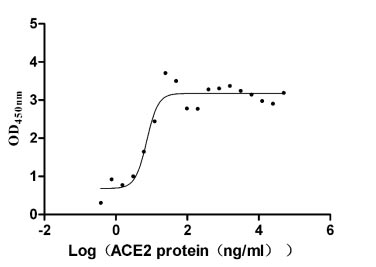
①Measured by its binding ability in a functional ELISA. Immobilized SARS-CoV-2-S1-RBD (CSB-MP3324GMY1b1) at 5 μg/ml can bind Cynomolgus-ACE2, the EC50 is 5.638-9.496 ng/ml.
Target Names
ACE2
Uniprot NO.
Research Area
Cancer
Molecular Characterization
Species
Macaca fascicularis (Crab-eating macaque) (Cynomolgus monkey)
Source
Mammalian cell
Expression Region
18-741aa
Target Protein Sequence
QSTIEEQAKTFLDKFNHEAEDLFYQSSLASWNYNTNITEENVQNMNNAGEKWSAFLKEQSTLAQMYPLQEIQNLTVKLQLQALQQNGSSVLSEDKSKRLNTILNTMSTIYSTGKVCNPNNPQECLLLDPGLNEIMEKSLDYNERLWAWEGWRSEVGKQLRPLYEEYVVLKNEMARANHYKDYGDYWRGNYEVNGVDGYDYNRDQLIEDVERTFEEIKPLYEHLHAYVRAKLMNAYPSYISPTGCLPAHLLGDMWGRFWTNLYSLTVPFGQKPNIDVTDAMVNQAWNAQRIFKEAEKFFVSVGLPNMTQGFWENSMLTDPGNVQKVVCHPTAWDLGKGDFRIIMCTKVTMDDFLTAHHEMGHIQYDMAYAAQPFLLRNGANEGFHEAVGEIMSLSAATPKHLKSIGLLSPDFQEDNETEINFLLKQALTIVGTLPFTYMLEKWRWMVFKGEIPKDQWMKKWWEMKREIVGVVEPVPHDETYCDPASLFHVSNDYSFIRYYTRTLYQFQFQEALCQAAKHEGPLHKCDISNSTEAGQKLLNMLKLGKSEPWTLALENVVGAKNMNVRPLLNYFEPLFTWLKDQNKNSFVGWSTDWSPYADQSIKVRISLKSALGDKAYEWNDNEMYLFRSSVAYAMRTYFLEIKHQTILFGEEDVRVADLKPRISFNFYVTAPKNVSDIIPRTEVEEAIRISRSRINDAFRLNDNSLEFLGIQTTLAPPYQSPVTT
Mol. Weight
112.7 kDa
Protein Length
Partial
Tag Info
C-terminal hFc1-tagged
Buffer
Lyophilized from a 0.2 μm filtered PBS, 6% Trehalose, pH 7.4
Storage
Store at -20°C/-81°C upon receipt, aliquoting is necessary for mutiple use. Avoid repeated freeze-thaw cycles.
Lead Time
3-7 business days
Notes
Repeated freezing and thawing is not recommended. Store working aliquots at 4°C for up to one week.
Shelf Life
The shelf life is related to many factors, storage state, storage temperature and the stability of the product itself. Generally, the shelf life of lyophilized form is 6 months at -20°C/-80°C from the date of receipt.
Troubleshooting and FAQs
Datasheet & COA
Please contact us to get it.
Images
  • (Tris-Glycine gel) Discontinuous SDS-PAGE (reduced) with 5% enrichment gel and 15% separation gel.
  • Activity
    Measured by its binding ability in a functional ELISA. Immobilized SARS-CoV-2-S1-RBD (CSB-MP3324GMY1b1) at 5 μg/ml can bind Cynomolgus-ACE2, the EC50 is 5.638-9.496 ng/ml.
  • The purity of ACE2 was greater than 95% as determined by SEC-HPLC
Description

This recombinant protein is a high-purity (>90% measured by SDS-PAGE and SEC-HPLC) form of Macaca fascicularis angiotensin-converting enzyme 2 (ACE2), expressed in mammalian cells. It consists of the amino acids 18-741 of Macaca fascicularis ACE2 protein and is fused with a C-terminal hFc tag for enhanced stability and detection. This recombinant ACE2 protein contains low endotoxin levels (<1.0 EU/μg, LAL method), ensuring minimal interference in cell-based assays. Its functional activity has been confirmed by binding to SARS-CoV-2-S1-RBD (EC50: 5.638–9.496 ng/mL in ELISA), validating its relevance in COVID-19 and ACE2-related research. Its lyophilized formulation is convenient for long-term stability and reconstitution. Designed for cancer and virology studies, this recombinant ACE2 protein is a critical tool for investigating viral entry mechanisms (e.g., SARS-CoV-2), receptor- ligand interactions, and therapeutic development. Its mammalian cell expression ensures proper post-translational modifications, closely mimicking native protein behavior.

Macaca fascicularis, also referred to as the long-tailed or crab-eating macaque, presents a significant focus in biomedical research, notably concerning the ACE2. ACE2 acts as a receptor for the spike protein of coronaviruses such as SARS-CoV and SARS-CoV-2, facilitating viral entry into host cells [1][2]. The biochemical properties and genetic variations of ACE2 in M. fascicularis have been explored, revealing insights into its susceptibility to SARS-CoV-2, aligning with findings that multiple Old World monkeys, including M. fascicularis, can be infected and develop clinical symptoms akin to those seen in human COVID-19 cases [3][4][5].

The affinity of ACE2 for the receptor-binding domain of the SARS-CoV-2 spike protein is critical in evaluating the species' susceptibility to the virus. Studies indicate that the ACE2 of M. fascicularis exhibits strong binding interactions with the spike protein, suggesting a high potential for infection and consequent disease [2][3]. Comparatively, M. fascicularis, along with M. mulatta (Rhesus macaque), are established models for studying human diseases, particularly due to their similar ACE2 structure, which has been exploited in various preclinical studies [4][5]. Furthermore, the genetic composition of M. fascicularis is notably diverse, which may influence the patterns of ACE2 expression and further modulate responses to viral infections [5][6].

In addition to its role as a viral receptor, ACE2 possesses physiological functions that are highly relevant to cardiovascular health by regulating the renin-angiotensin system. It catalyzes the conversion of angiotensin II, a potent vasoconstrictor, into angiotensin 1-7, which has vasodilatory effects. Alterations in ACE2 expression in the context of infection can lead to dysregulation of this system, contributing to aspects of disease pathology seen in infected individuals [1]. The nexus between ACE2's viral and physiological roles underscores the importance of M. fascicularis in comprehensive studies aimed at understanding both viral biology and cardiovascular implications stemming from infections [1].

References:
[1] J. Damas, G. Hughes, et al., Broad host range of sars-cov-2 predicted by comparative and structural analysis of ace2 in vertebrates. 2020. https://doi.org/10.1101/2020.04.16.045302
[2] L. Lopes, N. Pina, A. Silva, & P. Bandiera‐Paiva. Evolutionary analysis of mammalian ace2 and the key residues involved in binding to the spike protein revealed potential sars-cov-2 hosts. Journal of Medical Microbiology and Infectious Diseases, vol. 10, no. 1, p. 1-9, 2022. https://doi.org/10.52547/jommid.10.1.1
[3] Y. Liu, G. Hu, et al. Functional and genetic analysis of viral receptor ace2 orthologs reveals a broad potential host range of sars-cov-2, Proceedings of the National Academy of Sciences. vol. 118, no. 12, 2021. https://doi.org/10.1073/pnas.2025373118
[4] S. Laila, D. Astuti, I. Suparto, E. Handharyani, T. Register, & D. Sajuthi. Atherosclerotic lesion of the carotid artery in indonesian cynomolgus monkeys receiving a locally sourced atherogenic diet. Veterinary Sciences, vol. 9, no. 3, p. 105, 2022. https://doi.org/10.3390/vetsci9030105
[5] S. Kanthaswamy, J. Ng, et al. The genetic composition of populations of cynomolgus macaques (macaca fascicularis) used in biomedical research. Journal of Medical Primatology, vol. 42, no. 3, p. 120-131, 2013. https://doi.org/10.1111/jmp.12043
[6] M. Abdul‐Latiff, F. Ruslin, et al. Continental monophyly and molecular divergence of peninsular malaysia’smacaca fascicularis fascicularis, Biomed Research International. vol. 2014, p. 1-18, 2014. https://doi.org/10.1155/2014/897682

Customer Reviews and Q&A

 Customer Reviews

Target Background

icon of phone
Call us
301-363-4651 (Available 9 a.m. to 5 p.m. CST from Monday to Friday)

icon of address
Address
7505 Fannin St., Ste 610, Room 7 (CUBIO Innovation Center), Houston, TX 77054, USA
icon of social media
Join us with

Subscribe newsletter

Leave a message

* To protect against spam, please pass the CAPTCHA test below.
CAPTCHA verification
© 2007-2025 CUSABIO TECHNOLOGY LLC All rights reserved. 鄂ICP备15011166号-1
Select 0 Products