PLA2G7 Monoclonal Antibody

CSB-MA089171A0m
Size:
50μg
50μg100μg
US$210
Quantity:
Species Reactivity: Human,Mouse
Raised in: mouse
Application: ELISA,WB,IHC
For inquiries on large quantities or another requirements
Send an Inquiry
Start an on-line Chat
Orders can only be placed from within the U.S.

Product Details

Uniprot NO.
Raised in
mouse
Species Reactivity
Human,Mouse
Immunogen
Recombinant LP-PLA2 Protein
Immunogen Species
Homo sapiens (Human)
Conjugate
Non-conjugated
Clonality
monoclonal
Isotype
IgG1
Clone No.
2A1B6
Purification Method
>95%,Protein G purified
Concentration
It differs from different batches. Please contact us to confirm it.
Buffer
Preservative: 0.03% Proclin 300Constituents: 50% Glycerol, 0.01M PBS, PH 7.4
Form
liquid
Tested Applications
ELISA,WB,IHC
Recommended Dilution
ApplicationRecommended Dilution
WB1:500-1:5000
IHC1:50-1:500
Storage
Upon receipt, store at -20°C or -80°C. Avoid repeated freeze.
Lead Time
Basically, we can dispatch the products out in 1-3 working days after receiving your orders. Delivery time maybe differs from different purchasing way or location, please kindly consult your local distributors for specific delivery time.
Usage
For Research Use Only. Not for use in diagnostic or therapeutic procedures.
Datasheet & COA
Images
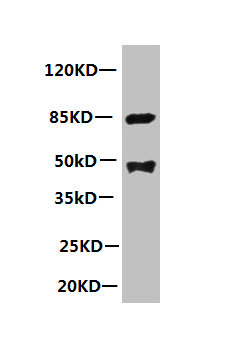
  • All lanes: Mouse anti-human Platelet-activating factor acetylhydrolase monoclonal Antibody at 1μg/ml
    Lane 1:mouse spleen tissue
    Secondary:HRP labeled Goat polyclonal to Mouse IgG at 1/3000 dilution
    Predicted band size : 48kd
    Observed band size : 48kd
    Additional bands at: 85kd

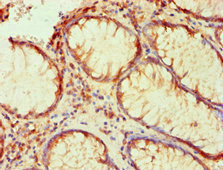
  • Immunohistochemical of paraffin-embedded human colon cancer using CSB-MA089171A0m at dilution of 1:200.

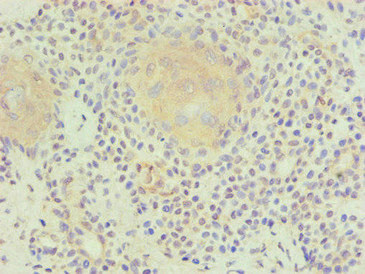
  • Immunohistochemical of paraffin-embedded human breast cancer using CSB-MA089171A0m at dilution of 1:200.

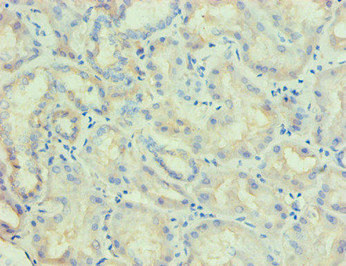
  • Immunohistochemical of paraffin-embedded human kidney tissue using CSB-MA089171A0m at dilution of 1:200.

Description

The mice spleens isolated from recombinant LP-PLA2 protein-immunized mice are fused with myeloma cells to generate hybridomas. Hybridoma cells are further injected into the abdominal cavity of mice, producing and obtaining mouse ascites fluid containing PLA2G7 monoclonal antibody. This monoclonal antibody occurs as an unconjugated IgG1. Its purity is greater than 95% using protein G purified. It shows reactivity with human and mouse samples. The target LP-PLA2 protein is a phospholipase A2 enzyme that catalyzes the degradation of platelet-activating factor to biologically inactive products. Defects in this gene are a cause of platelet-activating factor acetylhydrolase deficiency. And this anti-PLA2G7 monoclonal antibody is suitable for the ELISA, WB, and IHC assays.

Customer Reviews and Q&A

 Customer Reviews

Target Background

Gene References into Functions
  1. The decrease of Lp-PLA2 activity in adolescents with type 2 diabetes suggests that elevated blood glucose concentrations do not have a dominant elevating effect, perhaps even a decreasing influence on Lp- PLA2 activity. PMID:29027597
  2. Polymorphisms in rs1805017 and rs1805018, additional interaction between rs1805017 and smoking, and haplotype containing the rs1805017-H and rs1805018-T alleles were associated with increased CHD risk. PMID:29728838
  3. CD163 positive macrophages have roles in lipoprotein-associated phospholipase A2 activity in atherosclerotic plaque PMID:29101839
  4. evidence that Lp-PLA2 could predict all-cause mortality and rehospitalization risk among patients with ACS undergoing PCI. PMID:29121808
  5. the relationship between two variants of apoC1 and the risk of polycystic ovary syndrome, evaluated the genotypic effects on clinical, hormonal and metabolic indexes and plasma platelet-activating factor acetylhydrolase (PAF-AH) activity, was investigated. PMID:29636060
  6. Met117 oxidation caused enhanced flexibility and decreased compactness in oxidized state. PAF binding interaction with oxidized protein was mediated only through hydrophobic interactions. PMID:29427679
  7. Persistently elevated serum concentrations of Lp-PLA2 were associated with an unfavorable outcome in patients with sepsis. PMID:29138849
  8. Resveratrol downregulates Lp-PLA2 expression by inhibiting oxidative stress via SIRT1 pathway in the THP-1-derived macrophages. PMID:28608449
  9. Elevated Lp-PLA2 mass was associated with all cause-death independently of other risk factors within one year after acute ischemic stroke. PMID:28934604
  10. PLA2G7 and PON1 are overexpressed in prostatic neoplasm patients and can be detected early in blood. PMID:29050675
  11. A PLA2G7 gene polymorphism determines the plasma levels of lipoprotein-associated phospholipase A2 activity and mass and manifests as a risk factor for atherosclerosis. PMID:27905470
  12. Conclusion RBP4 may be used as a predictive factor of diabetic nephropathy patients complicated with silent cerebral infarction (SCI) and is positively correlated with cognitive dysfunction. RBP4/Lp-PLA2/Netrin-1 pathway activation may be one of the occurrence mechanisms in diabetic nephropathy complicated with SCI. PMID:28704853
  13. Greater Lp-PLA2 activity or mass was associated with an increased risk of CHD and IS PMID:28514697
  14. Lp-PLA2 G994T gene polymorphism may be an independent risk factor of ischemic stroke in Chinese population. PMID:28960681
  15. Lifelong lower Lp-PLA2 activity was not associated with major risks of vascular or non-vascular diseases in Chinese adults. PMID:27301456
  16. phospholipase A2 Group 7 (PLA2G7), to be important in regulating tumor cell migration and a novel tumor-promoting factor in nasopharyngeal carcinoma. PMID:27487154
  17. Suggest that the plasma biomarkers Lp-PLA2 activity and mass are markers of abdominal aortic aneurysm risk after adjusting for relevant confounders. PMID:28475940
  18. The substitution of whole grains and legumes for refined rice resulted in a reduction in Lp-PLA2 activities in plasma and PBMCs partly through improved glycemic control, increased consumption of protein relative to carbohydrate, and reduced lipid peroxides. PMID:24904022
  19. Lipoprotein-associated phospholipase A2 and its relationship with markers of subclinical cardiovascular disease PMID:28502488
  20. High levels of high-sensitive C-reactive protein and lipoprotein-associated phospholipase-A2 did not relate to endothelial dysfunction in ST-elevation myocardial infarction patients treated with percutaneous coronary intervention. PMID:28110894
  21. In persistent prehypertension, increased ox-LDL hydrolysis by Lp-PLA2 enhances arterial stiffness without an age-related increase in blood pressure. PMID:28142077
  22. LpPLA2 is found in both LDL and HDL and is distributed differently in men with T1D without any relationship to CAC score progression PMID:27206945
  23. In a multi-ethnic cohort without baseline cardiovascular disease, higher Lp-PLA2 mass and activity were not significantly associated with an increased risk for incident peripheral arterial disease. PMID:28215109
  24. Lipoprotein-associated phospholipase A2 as a new marker to determine cardiovascular risk in hypercholesterolemic dyslipidaemic children PMID:27614353
  25. The simultaneous presence of the PLA2G7 279VV genotype and persistence of overweight synergistically increases the risk for hypertension. PMID:28334001
  26. Elevated mass and activity of Lp-PLA2 related to inflammation and atherosclerosis may take part in the development of kidney injury and atherosclerosis in patients with chronic kidney disease. PMID:27776715
  27. Taken together, these results revealed that Lp-PLA2 silencing protected against ox-LDL-induced oxidative stress and cell apoptosis via Akt/mTOR signaling pathway in human THP1 macrophages. PMID:27392709
  28. Plasma Lp-PLA2 concentration was independently associated with coronary heart disease in Chinese patients. PMID:28222638
  29. The distribution of V279F-AA+AC genotype and R92H-AA+AG genotype in the AP group was higher than that in the control group, whereas the Severity of Acute Pancreatitis (SAP) group and SAP with multiple organ dysfunction syndrome group distributions were higher than those in the MAP group and SAP without MODS group.G-C-A, G-A-G, and G-C-G haploids formed by A379V, V279F, and R92H may be associated with AP susceptibility PMID:28332853
  30. results do not support added value of Lp-PLA2 for predicting cardiovascular events or mortality among CHD patients beyond traditional risk factor PMID:27097870
  31. High Lp-PLA2 expression is associated with type 1 diabetes. PMID:27710915
  32. This presentation aims at clarifying the involvement of Lp-PLA2 in the pathophysiology of atherosclerosis, and at assessing its interest both as a biomarker for the onset of CV events and as a therapeutic target--{REVIEW} PMID:26499399
  33. PLA2G7 expression is significantly upregulated in human masticatory mucosa during wound healing PMID:28005267
  34. A considerable portion of Chinese ischemic stroke patients are insensitive to aspirin treatment, which may be correlated with the MDR1 C3435T, TBXA2R (rs1131882), and PLA2G7 (rs1051931-rs7756935) polymorphisms. PMID:27641736
  35. Uremic environment but not inflammation per se increases plasma Lp-PLA2 activity and upregulates monocytic Lp-PLA2 mRNA expression. The highest Lp-PLA2 levels were found in the classical and not in the inflammatory subsets. Atherosclerosis also contributes to a subset-specific increase in Lp-PLA2 mRNA expression. PMID:27992874
  36. Lp-PLA2 levels in human plasma were positively associated with the severity of coronary heart disease. PMID:27941334
  37. Greater Lp-PLA2 activity or mass was independently associated with cardiovascular events in patients with coronary heart disease, particularly in patients with stable coronary heart disease who were not receiving therapies for inhibiting Lp-PLA2.[review] PMID:27956130
  38. Expression of LpPLA2 may be associated with obesity. Therefore, LpPLA2 mRNA expression levels may develop as an important risk predictor for vascular complications in Metabolic syndrome. PMID:26460076
  39. PLA2G7 gene expression was co-regulated by 17-beta-estradiol and promoter methylation. PMID:27450918
  40. no relationship with either proinflammatory cytokines or neopterin identified in Alzheimer disease PMID:26828804
  41. Lp-PLA2 activity in Japanese men aged 50-79 years was associated significantly and positively with IMT and plaque in the carotid artery but Mendelian randomization did not support that Lp-PLA2 is a causative factor for subclinical atherosclerosis. PMID:26775119
  42. 279Val-->Phe Polymorphism of Lp-PLA2 may lead to decrease the enzymatic activity via changes of folding kinetics and recognition to its substrate. PMID:26595893
  43. Increased plasma Lp-PLA2 activity portends increased risk of resistant hypertension. PMID:26801405
  44. These findings suggest that plasma PAF may be a potential biomarker for predicting poor bone health in postmenopausal women. PMID:25501698
  45. Studied whether the level of Lp-PLA2 is associated with subclinical atherosclerosis in patients with rheumatoid arthritis. PMID:26504820
  46. Higher Lp-PLA2 mass and activity were associated with development of both incident clinical peripheral arterial disease and low ankle brachial index. PMID:26848158
  47. A V279F loss-of-function variant in the PLA2G7 gene resulting in 50% lower activity for each copy of the variant, is common in East Asians and associated with risk of Vascular diseases. PMID:26791069
  48. It is assumed that Lp-PLA2 is involved in vascular calcification and that dp-ucMGP is a more appropriate biomarker of residual risk than Lp-PLA2 itself. PMID:25458708
  49. Cytosolic phospholipase A2 modulates TLR2 signaling in synoviocytes. PMID:25893499
  50. Lipoprotein associated phospholipase A2 activity and apolipoprotein C3 loss-of-function variants are involved in cardiovascular disease PMID:26117401

Show More

Hide All

icon of phone
Call us
301-363-4651 (Available 9 a.m. to 5 p.m. CST from Monday to Friday)

icon of address
Address
7505 Fannin St., Ste 610, Room 7 (CUBIO Innovation Center), Houston, TX 77054, USA
icon of social media
Join us with

Subscribe newsletter

Leave a message

* To protect against spam, please pass the CAPTCHA test below.
CAPTCHA verification
© 2007-2025 CUSABIO TECHNOLOGY LLC All rights reserved. 鄂ICP备15011166号-1
Select 0 Products