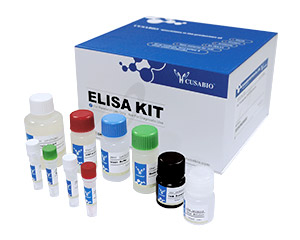
24T ELISA Kit Trial Size (Only USD$150/ kit)
* Sample kit cost can be deducted as a $30 credit for each 96-assay kit of the same analyte and brand you subsequently purchase within six months until depleted.
More details >>
Interested in a trial size? Please leave a message below.
For
inquiries on large quantities or
another requirements
quantitative
The tag type will be determined during production process. If you have specified tag type, please tell us and we will develop the specified tag preferentially.
Measurement
Sandwich
Storage
Store at 2-8°C. Please refer to protocol.
Shelf Life
6 months
Lead Time
3-5 working days after you place the order, and it takes another 3-5 days for delivery via DHL or FedEx.
Note: All of our proteins are default shipped with normal blue ice packs, if you request to ship with dry ice, please communicate with us in advance and extra fees will be charged.
IGF-binding proteins prolong the half-life of the IGFs and have been shown to either inhibit or stimulate the growth promoting effects of the IGFs on cell culture. They alter the interaction of IGFs with their cell surface receptors. Also exhibits IGF-independent antiproliferative and apoptotic effects mediated by its receptor TMEM219/IGFBP-3R. Promotes testicular germ cell apoptosis.
Gene References into Functions
Compound 49b treatment inhibited these retinal changes. In REC cultured in hypoxia, levels of IGFBP-3 were reduced, which were significantly increased by Compound 49b.PMID:27439004
Study indicated that IGFBP-3 shRNA might rehabilitate erectile function via decreased concentrations of serum LDL lipoprotein and triglyceride, increased cavernosal smooth muscle and improvement in NO-cGMP signaling in diabetic rats.PMID:25879169
IGFBP-3 shRNA may rehabilitate erectile function via increases of concentrations of serum testosterone and cavernous cyclic guanosine monophosphate in streptozotocin-induced diabetic ratsPMID:25582342
IGFBP-3 has novel protective effects on retinal and systemic vasculature and may be a therapeutic candidate for ocular complications such as diabetic retinopathy.PMID:22792172
obesity induces specific changes in the expression profile of the adipose tissue depot surrounding the pancreas, leading to a decrease in IGFBP3 secretionPMID:22067319
The results support the suggestion that inactivation of Mxi1 has a positive effect on cell proliferation by down-regulating IGFBP-3.PMID:22008548
Paraquat-treated rats showed enhanced gene expression of growth factors such as platelet-derived growth factor-A and insulin-like growth factor-1 at 21 days and transforming growth factor-beta 1 at 14 days.PMID:20498031
Data suggest that the inhibitory effect of chronic arthritis on skeletal muscle is higher in fast glycolytic than in slow oxidative muscle and that IGF-I administration attenuates this effect and decreases atrogin-1 and IGFBP-3 gene expression.PMID:20519361
Downregulation of IGFBP-3 gene expression may cause pulmonary hypoplasia in the nitrofen-induced CDH model by interfering with retinoid signaling pathway.PMID:19844724
IGFBP-3 and BAX interaction activates germ cell apoptosis via the mitochondria-dependent pathway.PMID:19887447
IGFBP-3 and -5 proteins may have potential modulatory roles in type I fiber-dominated muscles, aging, and regrowth from atrophy.PMID:12397024
role of glucocorticoids in the insulin-like growth factor binding protein (IGFBP)-3 response to endotoxinPMID:12485840
Expressed in cardiac muscle cells. Serum withdrqwal-induced increase in apoptosis of cardiac muscle cells associated with IGFBP-3.PMID:12508914
data indicate that acute inflammation inhibits serum concentrations of IGFBP-3 by decreasing its synthesis in the liver, rather than increasing its proteolysisPMID:12581876
Aminoguanidine inhibition of inducible nitric oxide synthase blocked the inhibitory effect of LPS on both IGFBP-3 serum levels and its hepatic mRNA levels.PMID:13129855
IGFBP-3 could play proapoptotic action at the myocardial level and suggest a novel role for this protein in cardiovascular dysfunction.PMID:15055478
IGF-I uses different and only partially overlapping intracellular signaling pathways for regulation of IGFBP-3 and -5 with opposing biological functions might be important for modulation of IGF bioactivity in cellular microenvironment.PMID:15845624
cross-talk between the IGFBP-3-dependent STAT-1 signaling and the TGF-beta-dependent ERK pathway that regulates mesenchymal chondroprogenitor cell proliferationPMID:15956343
In utero dibutyl phthalate leads to IGFBP3 expression in rat testis in fetal and postnatal development.PMID:16037377
retinoic acid modulates the secreted IGFBP-2 and -3 during O(2) exposure and inhibits the increase in collagen that occurs during lung injuryPMID:16055936
Liver cirrhosis is accompanied by an altered spatial expression of IGFBP-3PMID:16098781
Intracerebroventricular infusion of IGFBP-3 significantly impaired insulin action at the liver (45% increase in hepatic glucose production, P < 0.01).PMID:17003344