* Sample kit cost can be deducted as a $30 credit for each 96-assay kit of the same analyte and brand you subsequently purchase within six months until depleted. More details >>
Interested in a trial size? Please leave a message below.

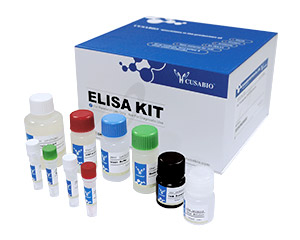
This ELISA kit provides quantitative measurement of KLKB1 (plasma prekallikrein) in mouse samples, supporting cardiovascular research focused on the kallikrein-kinin system and contact activation pathway. Because KLKB1 circulates as an abundant zymogen yet undergoes context-dependent cleavage and consumption during thromboinflammatory events, accurate quantification across both baseline and activated states demands a well-calibrated assay range and appropriate sample handling.
Detection Range: The 0.625–40 ng/mL range accommodates the substantial decreases in circulating KLKB1 observed during disseminated intravascular coagulation or sepsis-driven contact activation, while also capturing elevated baseline levels in plasma with appropriate dilution, since mouse plasma prekallikrein typically circulates in the µg/mL range.
Sensitivity: At 0.3125 ng/mL, the kit detects residual KLKB1 in heavily consumed samples and low-concentration sources such as cell culture supernatants from hepatocyte cultures, where secreted prekallikrein levels are substantially lower than in circulation.
Sample Compatibility: Validation across serum, plasma, cell culture supernatants, and tissue homogenates enables researchers to track KLKB1 from its hepatic production site through systemic circulation and into target tissues such as kidney or vascular beds affected by ischemia-reperfusion injury.
Assay Efficiency: The 1–5 hour protocol and 50–100 µL sample volume accommodate longitudinal mouse bleeding studies where serial plasma volumes are limited by body weight constraints.
This kit is directly applicable to studies of thrombosis, bradykinin-mediated vascular permeability, and contact pathway-driven inflammation in cardiovascular disease models.





