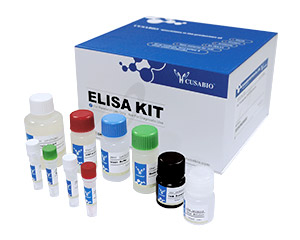
Mouse cluster of differentiation 6(CD6) ELISA Kit

Promotion
Code: CSB-EL004949MO
Size:
96T,5×96T,10×96T
Pls inquire
Quantity:
Sample Types: serum, plasma, tissue homogenates
Detect Range: 15.6 pg/ml-1000 pg/ml.
Sensitivity: 3.9 pg/ml
Trial Size:
24T ELISA Kit Trial Size (Only USD$150/ kit)
* Sample kit cost can be deducted as a $30 credit for each 96-assay kit of the same analyte and brand you subsequently purchase within six months until depleted. More details >>
Interested in a trial size? Please leave a message below.

For inquiries on large quantities or another requirements
Send an Inquiry
Start an on-line Chat
Online ordering is currently available for U.S. customers only. For orders outside the U.S., please kindly submit an inquiry or start a chat with us.
Promotion

Product Details

Alternative Names
Cd6T-cell differentiation antigen CD6 ELISA Kit; CD antigen CD6 ELISA Kit
Abbreviation
CD6
Uniprot NO.
Species
Mus musculus (Mouse)
Sample Type
serum, plasma, tissue homogenates
Detection Range
15.6 pg/ml-1000 pg/ml.
Sensitivity
3.9 pg/ml
Assay Time
1-5h
Sample Loading Volume
50-100ul
Detection Wavelength
450 nm
Research Area
Immunology
Storage
Store at 2-8°C. Please refer to protocol.
Shelf Life
6 months
Lead Time
3-5 working days after you place the order, and it takes another 3-5 days for delivery via DHL or FedEx.
Note: All of our proteins are default shipped with normal blue ice packs, if you request to ship with dry ice, please communicate with us in advance and extra fees will be charged.
Troubleshooting and FAQs
Description

The ELISA Kit is designed for quantitatively measuring mouse CD6 levels in samples, including serum, plasma, or tissue homogenates. It uses the sandwich enzyme immunoassay technique in combination with the enzyme-substrate chromogenic reaction to quantify the analyte in the sample. The color develops positively to the amount of CD6 in samples. The color intensity is measured at 450 nm via a microplate reader.

CD6 is a T-cell costimulatory receptor implicated in the pathogenesis of multiple autoimmune and inflammatory diseases. CD6 is mainly expressed on CD4 T cells and promotes immune synapse formation, T-cell activation, and T-cell migration through interaction with its ligand ALCAM/CD166. The CD6-ALCAM pathway modulates T cell activation, differentiation, and trafficking and thus plays an integral role in inflammation and autoimmunity. CD6 has been involved in numerous inflammatory and autoimmune diseases, including psoriasis, multiple sclerosis, rheumatoid arthritis, graft versus host disease, Sjögren’s syndrome, and inflammatory bowel disease.


Customer Reviews and Q&A

 Customer Reviews

Target Background

Function(From Uniprot)
Cell adhesion molecule that mediates cell-cell contacts and regulates T-cell responses via its interaction with ALCAM/CD166. Contributes to signaling cascades triggered by activation of the TCR/CD3 complex. Functions as costimulatory molecule; promotes T-cell activation and proliferation. Contributes to the formation and maturation of the immunological synapse. Functions as calcium-dependent pattern receptor that binds and aggregates both Gram-positive and Gram-negative bacteria. Binds both lipopolysaccharide (LPS) from Gram-negative bacteria and lipoteichoic acid from Gram-positive bacteria. LPS binding leads to the activation of signaling cascades and down-stream MAP kinases. Mediates activation of the inflammatory response and the secretion of pro-inflammatory cytokines in response to LPS.
Gene References into Functions
  1. Results indicate Cdcp1 (CD318) as a ligand of T-cell differentiation antigen CD6 (CD6) and a potential target for the diagnosis and treatment of autoimmune diseases. PMID:28760953
  2. These results suggest that (i) CD6 is a negative regulator of T-cell activation, (ii) at the same time, CD6 is a positive regulator of activated T-cell survival/proliferation and infiltration; and (iii) CD6 is a potential new target for treating multiple sclerosis (MS)and potentially other T-cell-driven autoimmune conditions. PMID:28209777
  3. these data indicate that CD6 modulates the threshold for thymocyte selection and the generation and/or function of several peripheral T cell subpopulations, including T reg cells PMID:27377588
  4. results reveal an unexpected role of CD6 in the pathogenesis of intestinal IR-induced injury by regulating the self-renewal of B1a cells. PMID:27909060
  5. this analysis identified 65 proteins not associated before with the Zap70-Lat-SLP-76 network and thus should provide cues for future functional experiments. PMID:24584089

Show More

Hide All

Subcellular Location
Cell membrane; Single-pass type I membrane protein.
Tissue Specificity
Expressed predominantly in thymus, lymph node and spleen.
Database Links
icon of phone
Call us
301-363-4651 (Available 9 a.m. to 5 p.m. CST from Monday to Friday)
icon of address
Address
No. 269, Shendun 5th Road, Donghu Hi-Tech Development Area, Hubei Province, 430206, P.R.China
icon of social media
Join us with

Subscribe newsletter

Leave a message

* To protect against spam, please pass the CAPTCHA test below.
CAPTCHA verification
© 2007-2025 CUSABIO TECHNOLOGY LLC All rights reserved. 鄂ICP备15011166号-1
Select 0 Products