* Sample kit cost can be deducted as a $30 credit for each 96-assay kit of the same analyte and brand you subsequently purchase within six months until depleted. More details >>
Interested in a trial size? Please leave a message below.

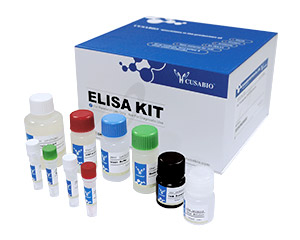
This Mouse CXCL1 (KC/GRO-α) ELISA Kit provides quantitative measurement of CXCL1 in Mus musculus samples, supporting research into neutrophil recruitment and CXC chemokine signaling in inflammatory and infectious disease models. Because CXCL1 levels can shift rapidly and dramatically between baseline and inflamed states, researchers need an assay that captures both resting and stimulated concentrations across diverse sample contexts.
Detection Range: The 4.69–300 pg/mL range spans basal circulating CXCL1 levels in healthy mice (typically low pg/mL) through the elevated concentrations seen in LPS challenge, wound models, or tumor microenvironments. Most serum and plasma samples from acute inflammation models fall within this window without dilution, though highly stimulated tissue homogenates may require pre-dilution.
Sensitivity: At 2.345 pg/mL, the kit detects CXCL1 in unstimulated cell culture supernates and baseline serum, where concentrations often sit near the single-digit pg/mL range — critical for establishing true pre-treatment baselines.
Sample Compatibility: Validation across serum, plasma, cell culture supernates, and tissue homogenates enables paired systemic and local CXCL1 profiling, connecting circulating chemokine gradients to tissue-level neutrophil chemoattractant production within a single experimental framework.
Assay Efficiency: A key practical benefit is the minimal sample consumption; the assay requires a loading volume of just 50µL, which can be further reduced to only 25µL of neat sample through a 2-fold dilution, preserving precious material. The 50 µL sample volume and 3.5-hour protocol accommodate serial blood draws from individual mice and high-throughput screening of conditioned media from primary bone marrow-derived macrophage cultures.
This kit is well suited for studies of sterile inflammation, bacterial peritonitis models, and tumor-associated myeloid cell recruitment.





