* Sample kit cost can be deducted as a $30 credit for each 96-assay kit of the same analyte and brand you subsequently purchase within six months until depleted. More details >>
Interested in a trial size? Please leave a message below.


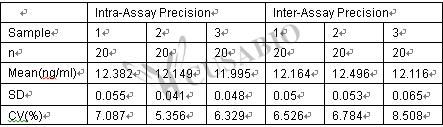
Intra-assay Precision (Precision within an assay): CV%<8%
Three samples of known concentration were tested twenty times on one plate to assess.
Inter-assay Precision (Precision between assays):CV%<10%
Three samples of known concentration were tested in twenty assays to assess.
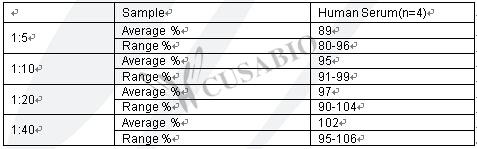
To assess the linearity of the assay, samples were spiked with high concentrations of human VCAM-1 in various matrices and diluted with the Sample Diluent to produce samples with values within the dynamic range of the assay.
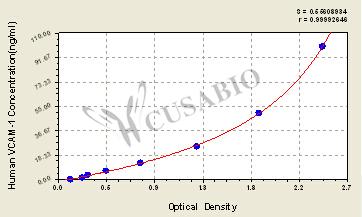
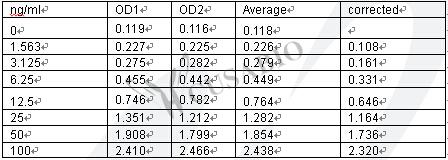
These standard curves are provided for demonstration only. A standard curve should be generated for each set of samples assayed.
Vascular cell adhesion molecule 1 (VCAM-1) is a transmembrane glycoprotein that mediates cell-cell adhesion and inflammatory responses. As a member of the immunoglobulin superfamily, VCAM-1 is primarily expressed on activated endothelial cells and acts as a key mediator in leukocyte recruitment during inflammation. The molecule promotes adhesion and transmigration of immune cells across the endothelial barrier by binding to integrin receptors on circulating leukocytes. VCAM-1 expression increases in response to inflammatory cytokines and serves as an important biomarker for vascular inflammation and endothelial dysfunction.
The Human Vascular cell adhesion molecule 1 ELISA kit (CSB-E04753h) uses a quantitative sandwich measurement principle for detecting VCAM1 in human samples. This assay works with serum, plasma, and tissue homogenates with a detection range of 1.563 ng/mL to 100 ng/mL and achieves a sensitivity of 0.611 ng/mL. The protocol requires 50-100 μL sample volume and can be completed within 1-5 hours, with detection performed at 450 nm wavelength.
Application Examples
Note: The following application examples are drawn from a selection of publications citing this product. For additional applications, please refer to the full list of references in the "Citations" section.
This ELISA kit has been applied in clinical research studies to measure vascular cell adhesion molecule levels in human serum samples. The applications span cardiovascular and inflammatory research contexts where VCAM-1 serves as a biomarker of endothelial activation and vascular inflammation.
• Cardiovascular research: Measurement of vascular cell adhesion molecule levels in patient serum samples as part of biomarker panels evaluating endothelial function and vascular health status
• Multi-biomarker profiling: Integration into broader analytical panels measuring inflammatory mediators, complement factors, and neurological markers to characterize disease states and physiological responses
• Clinical biomarker studies: Quantitative measurement of VCAM-1 in stored serum specimens from patients undergoing medical procedures to investigate associations with clinical outcomes and disease progression





