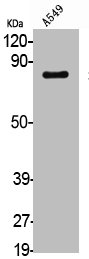
Synthesized peptide derived from Human Sp1 around the non-phosphorylation site of T453.
Immunogen Species
Homo sapiens (Human)
Conjugate
Non-conjugated
Isotype
IgG
Purification Method
The antibody was affinity-purified from rabbit antiserum by affinity-chromatography using epitope-specific immunogen.
Concentration
It differs from different batches. Please contact us to confirm it.
Buffer
Liquid in PBS containing 50% glycerol, 0.5% BSA and 0.02% sodium azide.
Form
Liquid
Note: We will preferentially ship the format that we have in stock, however, if you have any special requirement for the format, please remark your requirement when placing the order, we will prepare according to your demand.
Upon receipt, store at -20°C or -80°C. Avoid repeated freeze.
Lead Time
Basically, we can dispatch the products out in 1-3 working days after receiving your orders. Delivery time maybe differs from different purchasing way or location, please kindly consult your local distributors for specific delivery time.
Note: All of our proteins are default shipped with normal blue ice packs, if you request to ship with dry ice, please communicate with us in advance and extra fees will be charged.
Usage
For Research Use Only. Not for use in diagnostic or therapeutic procedures.
Transcription factor that can activate or repress transcription in response to physiological and pathological stimuli. Binds with high affinity to GC-rich motifs and regulates the expression of a large number of genes involved in a variety of processes such as cell growth, apoptosis, differentiation and immune responses. Highly regulated by post-translational modifications (phosphorylations, sumoylation, proteolytic cleavage, glycosylation and acetylation). Binds also the PDGFR-alpha G-box promoter. May have a role in modulating the cellular response to DNA damage. Implicated in chromatin remodeling. Plays an essential role in the regulation of FE65 gene expression. In complex with ATF7IP, maintains telomerase activity in cancer cells by inducing TERT and TERC gene expression. Isoform 3 is a stronger activator of transcription than isoform 1. Positively regulates the transcription of the core clock component ARNTL/BMAL1. Plays a role in the recruitment of SMARCA4/BRG1 on the c-FOS promoter. Plays a role in protecting cells against oxidative stress following brain injury by regulating the expression of RNF112.
Gene References into Functions
in this study we characterized TINCR overexpression regulated by SP1 transcription factor. High level of TINCR in turn competed with miR-7, and stabilized and promoted KLF4 expression, which consequently contributed to the oncogenic activity of TINCR.PMID:29614984
inhibition of Sp1, as well as induction of ER stress, leads to lysosomal membrane permeabilization (LMP), a sustained accumulation of cytosolic calcium, and eventually cell death in pancreatic cancer.PMID:28484232
Long non-coding RNA FTH1P3 regulates invasive/metastatic potential of esophageal squamous cell carcinoma via SP1/NF-kB pathway.PMID:30119232
These results suggested that KIAA0101 knockdown suppressed the cell proliferation and cell cycle progression by promoting the formation of p53/Sp1 complex in breast cancer.PMID:29902451
Our findings suggested that ZBP-89 and Sp1 overexpression induced Bak expression in a genetic manner. Increased Bak level was associated with poor patient survival, whereas high level of Sp1 is a beneficial factor for patient survival.PMID:29653560
Thus, these results demonstrate the presence of two new functional Sp1 binding sites in the HTLV-1 Long Terminal Repeat, which act as negative cis-regulatory elements of sense viral transcription.PMID:28256531
the results of the present study demonstrated that miR199a3p can inhibit LDHA expression by downregulating Sp1, and provided mechanistic evidence supporting the existence of a novel miR199a3p/Sp1/LDHA axis and its critical contribution to aerobic glycolysis in testicular cancer cells.PMID:30015851
The results demonstrate a direct relationship between SP1 binding and protein kinase CbetaII (PKCbetaII) transcription, and further suggest that this transcription factor is a contributor to the pathobiology of chronic lymphocytic leukaemia and potentially other malignant cells where PKCbetaII is overexpressed.PMID:28233872
Data indicate that improved Sp1 transcription factor (Sp1) and betaine homocysteine-S-methyltransferase (BHMT) expression are involved in the effects of zinc on oxidative stress.PMID:29204947
AGAP2-AS1 was upregulated and transcriptionally induced by SP1 in breast cancer..ChIP assays showed that AGAP2-AS1-bound CBP increased the enrichment of H3K27ac at the promoter region of MyD88, thus resulting in the upregulation of MyD88. Gain- and loss-of-function assays confirmed that the NF-kappaB pathway was activated by MyD88 and AGAP2-AS1PMID:30157918
The interaction of AR and SP1 contributes to regulate EPHA3 expression.PMID:29917167
These results indicated that miR-296 may act as a tumor suppressor in cervical cancer by directly targeting SP1PMID:29241478
The mechanism of prostaglandin E2-induced transcriptional up-regulation of Oncostatin-M by CREB and Sp1 has been described.PMID:29269396
Results indicated that SP1dependent promoter elements drive FoxO3a gene transcription in colorectal cancer (CRC), and indicated that SP1 upregulated FoxO3a is critical for CRC progression.PMID:29565456
Sp1 constitutively regulates the basal expression of the COMMD1 gene in human epithelial cell lines.PMID:29336469
In the present study, specificity protein 1 (SP1) was demonstrated to be a direct target of miR-376a.PMID:29257212
Results demonstrated that the upregulation of SP1 enhanced expression of VEGF promoting the angiogenesis and migration of trastuzumab-resistant ovarian cancer cell line SKOV3-T.PMID:29048687
Data suggest that MIR129 or MIR335 overexpression in keratinocytes inhibits MMP9 promoter activity and protein expression by targeting SP1; inhibition of these microRNAs has the opposite effect. These mechanisms may be involved in regulation of wound healing. (MIR = microRNA; MMP9 = matrix metalloproteinase-9; SP1 = transcription factor-SP1)PMID:29748291
The possible involvement of the GC box 1 at position - 54 in transcriptional regulation of Rbpms was corroborated by EMSA, which showed formation of a DNA-protein complex in the presence of the oligonucleotide corresponding to this Sp1-binding site.PMID:29423656
Our results suggested that BetA was able to enhance radiosensitization at least partially by downregulating Sp1 and upregulating PTEN through inducing Sp1 sumoylation. BetA is suggested to be a promising drug for increasing radiosensitization in oral squamous cell carcinoma radiotherapy.PMID:28791404
Mutation of two Sp1 motifs strongly reduced trans-activation of the late UF1 promoter by HPyV9 large T-antigen in HeLa cells.PMID:29135936
RhoGDIbeta overexpression led to downregulation of miR-200c, whereas miR-200c was able directly to target 3'-UTR of jnk2mRNA and attenuated JNK2 protein translation, which resulted in attenuation of Sp1mRNA and protein expression in turn, inhibiting Sp1-dependent MMP-2 transcription.PMID:28846829
Results show that C-terminal domain of SP1 interacts malat1 M5 domain which regulates its expression and stability. In turn, SP1 promotes malat1 transcription, thus forming a positive feedback loop in lung adenocarcinoma cells.PMID:29575609
Study demonstrated that Sp1 upregulation is common in castration-resistant prostate cancer (CRPC) tissues. Its knockdown significantly inhibited cell growth, aerobic glycolysis, and hypoxia-induced autophagy, which were accompanied by an increased G1 cell cycle arrest. These results provided evidence that Sp1 is an oncogene and positively regulates PKM2 in CRPC.PMID:29094170
The induced expression of RIP3 by UHRF1 RNAi depends on the presence of Sp1. Remarkably, the ectopic expression of RIP3 in RIP3-null cancer cells results in a decrease in tumor growth in mice. Therefore, our findings offer insights into RIP3 expression control in cancer cells and suggest an inhibitory effect of RIP3 on tumorigenesis.PMID:28981102
Licochalcone A showed the anti-proliferative and apoptotic effect in breast cancer cells through regulating Sp1 and apoptosis-related proteins in a dose- and a time-dependent manner.PMID:28498645
Results show that SP1 transactivation is prevented by KIBRA promoter methylation in clear cell renal cell carcinoma.PMID:29046731
Sp1 induces leptin expression in cooperation with estradiol action through estrogen receptor alphaPMID:28864005
Data suggest that among 11 NF-kappa B (NF-kappaB) pathway genes, SP1 transcription factor (SP1) expression could serve as a prognostic marker in patients.PMID:27545642
Results provide first findings for the SP1-related transcriptional regulation of ADAMTS3 and collagen genes in osteosarcoma cell lines.PMID:29518549
Taken together, these data clearly show that FKBP3/Sp1/HDAC2/p27 control cell proliferation during non-small cell lung cancer development.PMID:28839465
Results indicated that miR3633p is a tumor suppressor in HCC and functions through a mechanism involving SP1.PMID:28627662
NFATc2 and Sp1 are co-localized in cell nuclei and physically interact at the NFAT target sequence termed NFAT-responsive promotor construct. Sp1 increases the functional activity of its binding partner NFATc2.PMID:28774282
The protein level of transcription factor Sp1 was decreased.PMID:28713892
Study demonstrates that downregulation of Sp1 suppresses the malignant properties of A549 cells through the decreased beta4-galactosylation of highly branched N-glycans.PMID:28529241
The Sp1-mediaded allelic regulation of MMP13 expression by an esophageal squamous cell carcinoma susceptibility SNP rs2252070 has been demonstrated.PMID:27245877
Methylated +322-327 CpG site in the hOGG1 5'-UTR is associated with reduced expression of hOGG1 by decreasing the recruitment of Sp1 to the 5'-UTR of hOGG1 in A549 cells.PMID:28586012
that miR-22 and Sp1 form a double-negative feedback loop and consequently activation of PTEN, leading to a decline of p-AKT which influences the biological features of cellsPMID:28422727
SP1 is an important component of the transcriptional complex and LGR5 activity, which is modulated by its ligands RSPO1 and RSPO2, whose expression is modulated by methylation in gastrric carcinogenesis.PMID:28219935
we proposed a model to link FXR to Sp1, which included triggered FXR, p38/MAPK and/or PI3K/AKT signaling and phosphorylated Sp1, to illustrate the potential crosstalk between the two factors.PMID:28402278
Results found that Sp1 could activate miR-205 expression by binding to its promoter region in response to ionizing radiation in esophageal squamous cell carcinoma.PMID:27974696
miR-29c suppressed MGMT expression indirectly via targeting specificity protein 1PMID:27384876
miR-29c overexpression could abrogate the tumor progression and inhibit the Sp1/TGF-beta expressions in vivo, indicating that miR-29c could be a tumor suppressor and repress the Sp1/TGF-beta axis-induced EMT in lung cancer.PMID:27829234
Simultaneous high expression of PLD1 and Sp1 predicts a poor prognosis for pancreatic ductal adenocarcinoma patients.PMID:27713167
Specificity protein 1 (Sp1) orchestrates the transcription of both VEGF and VEGFR2; hence, Sp1 could act as a therapeutic target. Here, we demonstrate that CF3DODA-Me induced apoptosis, degraded Sp1, inhibited the expression of multiple drivers of the blebbishield emergency program such as VEGFR2, p70S6K, and N-Myc through activation of caspase-3, inhibited reactive oxygen species; and inhibited K-Ras activation to abolisPMID:28283889
MBD1 may be a tumor suppressor gene in advanced colorectal cancer (CRC)and affect the development and metastasis of CRC by regulating 8 tumor suppressor genes through binding with SP1.PMID:28473981
our results demonstrate that Sp1 positively regulates the basal transcription of FGF21 in the liver and adipose tissue and contributes to the obesity-induced FGF21 upregulation in mouse adipose tissue and hepatic FGF21 upregulation in hepatocarcinogenesis.PMID:28466020
The variant lies in a novel binding-site for the transcription factor Sp1, known to be involved in the regulation of ENG and ACVRL1 transcription.PMID:29305977
The results suggest that PLY inhibits osteoblast differentiation by downregulation of Sp1 accompanied by induction of autophagy through ROS-mediated regulation of the AMPK/mTOR pathway.PMID:28713020
these findings demonstrate that p53 can repress MCAK promoter activity indirectly via down-regulation of Sp1 expression level, and suggest that MCAK elevation in human tumor cells might be due to p53 mutationPMID:29244835
Show
More
Hide
All
Subcellular Location
Nucleus. Cytoplasm. Note=Nuclear location is governed by glycosylated/phosphorylated states. Insulin promotes nuclear location, while glucagon favors cytoplasmic location.
Protein Families
Sp1 C2H2-type zinc-finger protein family
Tissue Specificity
Up-regulated in adenocarcinomas of the stomach (at protein level). Isoform 3 is ubiquitously expressed at low levels.