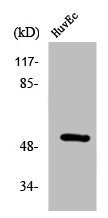
Synthesized peptide derived from Human HNF4-α around the phosphorylation site of S313.
Immunogen Species
Homo sapiens (Human)
Conjugate
Non-conjugated
Isotype
IgG
Purification Method
The antibody was affinity-purified from rabbit antiserum by affinity-chromatography using epitope-specific immunogen.
Concentration
It differs from different batches. Please contact us to confirm it.
Buffer
Liquid in PBS containing 50% glycerol, 0.5% BSA and 0.02% sodium azide.
Tested Applications
WB, IHC, IF, ELISA
Storage
Upon receipt, store at -20°C or -80°C. Avoid repeated freeze.
Lead Time
Basically, we can dispatch the products out in 1-3 working days after receiving your orders. Delivery time maybe differs from different purchasing way or location, please kindly consult your local distributors for specific delivery time.
Note: All of our proteins are default shipped with normal blue ice packs, if you request to ship with dry ice, please communicate with us in advance and extra fees will be charged.
Usage
For Research Use Only. Not for use in diagnostic or therapeutic procedures.
Transcriptional regulator which controls the expression of hepatic genes during the transition of endodermal cells to hepatic progenitor cells, facilitating the recruitment of RNA pol II to the promoters of target genes. Activates the transcription of CYP2C38. Represses the CLOCK-ARNTL/BMAL1 transcriptional activity and is essential for circadian rhythm maintenance and period regulation in the liver and colon cells.
Gene References into Functions
genetic association studies in population of children in Japan: Data suggest that mutations in INS, HNF1A, HNF4A, and HNF1B likely play critical roles in children with insulin-requiring autoantibody-negative type 1 diabetes in the population studied. (INS = insulin; HNF1A = HNF1 homeobox A; HNF4A = hepatocyte nuclear factor 4 alpha; HNF1B = HNF1 homeobox B)PMID:28597946
Our findings highlight the regulatory networks among TFs, lncRNAs, miRNAs, and mRNAs in hepatocellular carcinoma (HCC). Several key molecules, such as hsa-miR-195, lncRNA MALAT1 and TFs TAF1 and HNF4alpha, may contribute to the progression of HCC.PMID:30249878
Of the 465,447 CpG sites analyzed, 12 showed differential methylation (false discovery rate <0.15), including markers within genes associated with monogenic diabetes (HNF4A) or obesity (RREB1). The overall methylation at HNF4A showed inverse correlations with mRNA expression levels, though non significantPMID:29099273
DDX3 regulates MTP gene expression and lipid homeostasis through interplay with HNF4 and SHP.PMID:28128295
These findings suggest that GATA6 might interact with HNF4alpha and contribute to the development of mucinous-type lung adenocarcinomasPMID:29469192
HNF4-alpha and particularly SATB2 may be helpful in the differential diagnosis of pulmonary adenocarcinoma and metastases of colorectal adenocarcinomasPMID:29243296
Study identified for the first time that HNF4alpha and C/EBPalpha are important transcriptional regulators for FBP1 expression in human hepatoma HepG2 cells.PMID:29566023
Although DNA methylation (5mC) and hydroxymethylation (5hmC) are highly dynamic during early embryonic development, less is known about their roles at later stages of differentiation. 5hmC marks HNF4A promoter 1 previous to terminal hepatocyte differentiation. TET1-dependent 5hmC is required to activate promoter 1-driven HNF4A expression.PMID:28648900
HNF4A alone could be a gold standard marker for distinguishing primary gastric cancer from breast metastasisPMID:28583188
This work suggested that OA increased PKM1/PKM2 ratio, resulting in HNF-4alpha activation and hepatoma differentiation.PMID:28726775
HNF-4A plays a critical role in lipid and glucose homeostasis in second trimester of pregnancyPMID:28591938
These results indicate a critical and conserved role for HNF4A in maintaining intestinal homeostasis in response to microbiota.PMID:28385711
this is the first report to clarify the expression pattern and function of HNF4alpha during the definitive endoderm differentiation.PMID:28000155
HNF4A is central to the pathogenesis of NASH. This adds to previous literature demonstrating that HNF4A regulates the transcription of genes involved in the progression of NAFLD, and that HNF4A genetic variants play a potential role in NASH progressionPMID:29216278
Specifically tested on two model systems, the power of iSPOT is demonstrated to accurately predict the structures of a large protein-protein complex (TGFbeta-FKBP12) and a multidomain nuclear receptor homodimer (HNF-4alpha), based on the structures of individual components of the complexes.PMID:27496803
Apoptosis signal-regulating kinase 1 (ASK1) expression was dramatically suppressed and correlated with hepatocyte nuclear factor 4alpha (HNF4alpha) levels in hepatocellular carcinoma (HCC) tissues.PMID:27050273
2, 3-dihydroquinazolinone derivative, DHQZ-17, potently inhibited the expression of HNF4A, suppressing tumorigenicity of head and neck squamous cell carcinoma in vivo.PMID:28782802
Examination of clinical samples revealed that HNF4alpha and IL-1R1 levels increase with increasing severity of Hp-induced gastritis and reach their highest levels in Gastric Carcinoma. Co-expression of HNF4alpha and IL-1R1 was a crucial indicator of malignant transformation from gastritis to GC.PMID:26870992
HCV-related HCC could be mediated through HNF4alpha-microRNA deregulationPMID:27477312
results strongly suggest that the high frequency of the T130I polymorphism and its biological relationship with dysfunction in lipid metabolism in Mexican indigenous groups is a risk factor for the developing of T2D in MexicansPMID:28688048
Transplantation of HNF4A overexpressing immortalized human hepatocytes (IHH) resulted in better liver function and survival of rats with acute liver failure (ALF) compared with IHH. HNF4A improved hepatic differentiation of IHH. Transplantation of HNF4A-overexpressing IHH could improve the liver function and survival in a rat model of ALF.PMID:28870599
both iron-dextran injection and a 3% carbonyl iron-containing diet led to upregulation of hepatic inflammation, which was associated with a significant reduction in HNF4alpha expression and its downstream target, miR-122.PMID:28655781
Analysis of differential gene expression between mesenchymal and epithelial cancer cell lines revealed that hepatocyte nuclear factor 4alpha (HNF4alpha), a transcriptional activator of intestinal (epithelial) differentiation, and its target genes are highly expressed in epithelial cancer cell linesPMID:26996663
A new organ culture system for adult murine oesophagus is described. Using this, Cdx2 and HNF4alpha were ectopically expressed by adenoviral infection. We demonstrate the expression of CDX2 and HNF4alpha in human biopsy samples.PMID:27875772
data suggest that the ERK1/2 pathway plays an important role in the regulation of HNF4alpha-dependent hepatic gene expression.PMID:28196117
HNF4alpha upregulated the expression of liver glutaminase 2 in HepG2 cellsPMID:27466601
The Mexican genome-wide association study signal for high serum triglycerides on chromosome 18q11.2 harbors a regulatory single-nucleotide polymorphism, rs17259126, which disrupts normal hepatocyte nuclear factor 4 alpha binding and decreases the expression of the regional TMEM241 gene. Our data suggest that decreased transcript levels of TMEM241 contribute to increased triglyceride levels in Mexicans.PMID:27199446
The HNF4alpha-knockdown-induced stimulation of hepcidin could be entirely blocked when BMPR1A was interfered with at the same time.PMID:27660075
Direct induction of hepatocyte-like cells from immortalized human bone marrow mesenchymal stem cells by overexpression of HNF4a has been reported.PMID:27501760
Data redefine p.R114W as a pathogenic mutation that causes a distinct clinical subtype of HNF4A MODY with reduced penetrance, reduced sensitivity to sulfonylurea treatment, and no effect on birth weight.PMID:27486234
Renal Fanconi syndrome represents the only HNF4A feature showing complete penetrance. Our cases suggest that the p.R63W HNF4A mutation must be considered in subjects with a normal birth weight and postulate the possibility of liver involvement as a part of this condition.PMID:27245055
HNF-4alpha regulated miR-122 contributes to development of the gluconeogenic and lipid metabolism alterations observed in Type 2 diabetic mice and in palmitate-treated HepG2 cellsPMID:27592052
HNF4alpha regulated CES1 expression by directly binding to the proximal promoter of CES1.PMID:27075303
Epigenetic alterations of the newly identified genes MC4R and HNF4a in early life might contribute to metabolic profile changes, especially increased triglyceride levels, in the cord blood of preterm infants.PMID:27583872
HNF4A mutations can be associated with Maturity Onset Diabetes of the Young and Congenital Hyperinsulinism. Dual phenotype observed in the neonatal period progressing to diabetes in adulthood with prolonged episodes of hypoglycaemia.PMID:27552834
The results revealed the novel mechanism by which HNF-4alpha promoted ChREBP transcription in response to glucose, and also demonstrated that ChREBP-alpha and HNF-4alpha synergistically increased ChREBP-beta transcription.PMID:27029511
the results identify Exo70 as a novel transcriptional target of HNF4alpha to promote cell cycle progression in hepatoma, thus provide a basis for the development of therapeutic strategies for hepatocellular carcinoma.PMID:26848864
The present study aimed to explore the association between single nucleotide polymorphisms (SNPs) in the hepatocyte nuclear factor4alpha (HNF4alpha) gene and the incidence of type 2 diabetes in the Chinese Bai population in Dali city, China.PMID:26781905
SNPs at the CETP, HNF4A and KLF14 locus are associated with HDL-C levels and type 2 diabetes (in female participants).PMID:26670163
The HNF1A gene encodes the transcription factor hepatocyte nuclear factor-1alpha (HNF1alpha), which is expressed in many different tissues, including the liverPMID:26307397
Mutations in HNF4A and HNF1A genes might account for this early-onset inherited type 2 diabetes.PMID:26981542
HNF4alpha expression analysis revealed that pre-exposing the cells with FGF4 was more effective in hepatocyte differentiation.PMID:26743282
PHD2 suppresses the activity of TGF-beta1 pathway and consequently maintains the expression of hepatocyte nuclear factor-4alphaPMID:26624507
rejected the hypothesis that all human MODY-associated mutations in HNF1A / HNF4A induce changes in the pharmacokinetics of sulfonylureas in humans analogically to the Hnf1a(-/-) mouse modelPMID:26446475
Results showed that HNF4a is downregulated in colon carcinoma patients and its ectopic expression inhibited proliferation, migration and invasion of HT29, LoVo and SW480 cells.PMID:25808746
ETS2, HNF4A and JUNB are synergistic master regulators of epithelial-to-mesenchymal transition in cancer.PMID:26926107
Berberine has an effect on hepatic gluconeogenesis and lipid metabolism and is mediated through HNF-4alpha and regulated downstream of miR122PMID:27011261
In conclusion, our study revealed a novel mechanism by which TSH regulated the hepatic HNF-4alpha subcellular localization.PMID:26302721
Galpha12 overexpression in HCC inhibits MIR122 transactivation by inactivating HNF4alpha, which causes c-Met induction, contributing to cancer aggressiveness.PMID:25965999
We identified hepatocyte nuclear factor 4alpha as a regulatory factor that bound endogenous CLDN7 promoter in differentiating intestinal epithelial cells and stimulated CLDN7 promoter activity.PMID:26216285