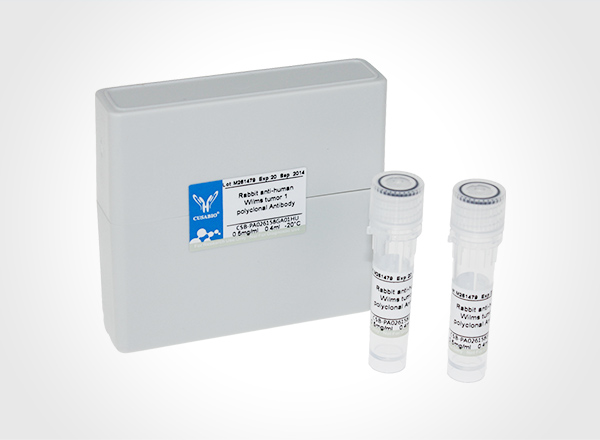
Caspase like protein ESPL1 antibody; Caspase-like protein ESPL1 antibody; ESP 1 antibody; ESP1 antibody; ESPL 1 antibody; Espl1 antibody; ESPL1_HUMAN antibody; Extra spindle poles like 1 antibody; Extra spindle poles like 1 protein antibody; Extra spindle poles-like 1 protein antibody; FLJ46492 antibody; KIAA0165 antibody; Separase antibody; Separin antibody; Similar to fission yeast cut1and gene antibody; SSE antibody
Raised in
Rabbit
Species Reactivity
Human
Immunogen
Recombinant Human Separin protein (1292-1495AA)
Immunogen Species
Homo sapiens (Human)
Conjugate
HRP
Clonality
Polyclonal
Isotype
IgG
Purification Method
>95%, Protein G purified
Concentration
It differs from different batches. Please contact us to confirm it.
Liquid
Note: We will preferentially ship the format that we have in stock, however, if you have any special requirement for the format, please remark your requirement when placing the order, we will prepare according to your demand.
Upon receipt, store at -20°C or -80°C. Avoid repeated freeze.
Lead Time
Basically, we can dispatch the products out in 1-3 working days after receiving your orders. Delivery time maybe differs from different purchasing way or location, please kindly consult your local distributors for specific delivery time.
Note: All of our proteins are default shipped with normal blue ice packs, if you request to ship with dry ice, please communicate with us in advance and extra fees will be charged.
Usage
For Research Use Only. Not for use in diagnostic or therapeutic procedures.
Caspase-like protease, which plays a central role in the chromosome segregation by cleaving the SCC1/RAD21 subunit of the cohesin complex at the onset of anaphase. During most of the cell cycle, it is inactivated by different mechanisms.
Gene References into Functions
Separase activity measurement may therefore be useful as a novel additional molecular marker for disease monitoringPMID:29370237
Studies identified and characterized the role of separase in mitosis, meiosis, non-canonical roles, its regulation, as a regulator of centriole disengagement, non proteolytic roles, diverse substrates, structural insights, and association of separase with cancer. [review]PMID:27966791
High ESP expression is associated with breast cancer.PMID:28859055
Proximity mapping of human separase has been presented.PMID:27495871
The assay was used to quantify Separase proteolytic activity in leukemic cell lines and peripheral blood samples from leukemia patients.PMID:26267133
Recruitment and activation of separase at centrosomes are two distinct steps that do not require microtubules.PMID:25299182
Separase protein levels decrease and Separase proteolytic activity increases exclusively in b3a2 p210BCR-ABL-positive cell lines under Imatinib treatment.PMID:26087013
Separase is an oncogene whose overexpression induces tumorigenesis, and indicate that Separase overexpression and aberrant nuclear localization are common in many tumor types and may predict outcome in some human malignancies.PMID:24792645
High ESPL1 mRNA expression was associated with luminal B breast cancers.PMID:25086634
Data indicate that separase is subject to native-state cis/trans isomerization by peptidyl-prolyl-isomerase Pin1.PMID:25921067
By consecutively acting as a protease and a cdk1 inhibitor, separase coordinates two key processes to achieve simultaneous and abrupt separation of sister chromatids.PMID:22814604
Kendrin is a novel and crucial substrate for separase (ESPL1) at the centrosome, protecting the engaged centrioles from premature disengagement and thereby blocking reduplication until the cell passes through mitosis.PMID:22542101
Plk1-mediated phosphorylation of Cdc6 promotes the interaction of Cdc6 and Cdk1, leading to the attenuation of Cdk1 activity, release of separase, and subsequent anaphase progression.PMID:21041660
Anaphase specific auto-cleavage of separase.PMID:12297314
Processing, localization, and requirement of separase for normal anaphase progression.PMID:12672959
Separase function is not restricted to anaphase initiation; its role in promoting loss of sister chromatid cohesion might be preferentially at arms but not centromeres.PMID:16177575
Protein phosphatase 2A and separase form a complex regulated by separase autocleavagePMID:17604273
Phosphorylation promotes complex formation indirectly, possibly by inducing a conformational change in full-length separase.PMID:17974570
The complete removal of cohesin from chromosome arms depends on separase.PMID:18003702
Separase has targets involved in regulation of G(2) to M progression after DNA damage in lung cancer cells.PMID:18616699
These results collectively suggest that Separase is an oncogene, whose overexpression alone in mammary epithelial cells is sufficient to induce aneuploidy and tumorigenesis in a p53 mutant background.PMID:18728194
Study reports that cohesin cleavage by human separase requires DNA in a sequence-nonspecific manner.PMID:19345191
Separase might be an oncogene, whose overexpression induces tumorigenesis. Separase overexpression and aberrant nuclear localization are common in many tumor types and may predict outcome in some human cancers.PMID:19351757
Plk1 and separase act at different times during M phase to license centrosome duplication, reminiscent of their roles in removing cohesin from chromosomesPMID:19758559