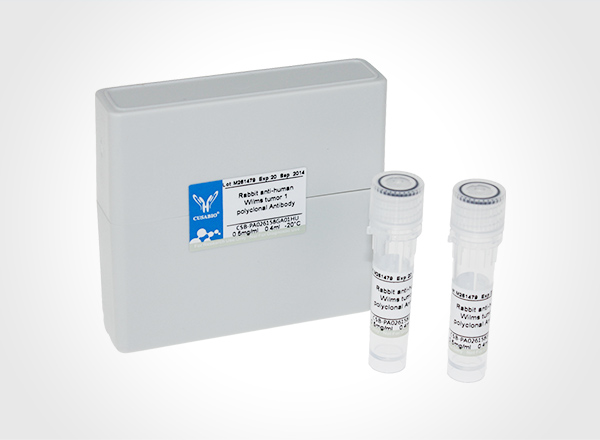
Calcium/calmodulin dependent protein kinase II alpha antibody; Calcium/calmodulin dependent protein kinase II beta antibody; Calcium/calmodulin dependent protein kinase II delta antibody; Calcium/calmodulin dependent protein kinase II gamma antibody; Calcium/calmodulin-dependent protein kinase type II subunit alpha antibody; CaM kinase II alpha antibody; CaM kinase II antibody; CaM kinase II beta antibody; CaM kinase II delta antibody; CaM kinase II gamma antibody; CaM kinase II subunit alpha antibody; CaMK-II subunit alpha antibody; CAMK2 antibody; Camk2a antibody; CAMK2B antibody; CAMK2D antibody; CAMK2G antibody; CAMKA antibody; KCC2A_HUMAN antibody
Raised in
Rabbit
Species Reactivity
Human
Immunogen
Recombinant Human Calcium/calmodulin-dependent protein kinase type II subunit alpha protein (321-478AA)
Immunogen Species
Homo sapiens (Human)
Conjugate
FITC
Clonality
Polyclonal
Isotype
IgG
Purification Method
>95%, Protein G purified
Concentration
It differs from different batches. Please contact us to confirm it.
Liquid
Note: We will preferentially ship the format that we have in stock, however, if you have any special requirement for the format, please remark your requirement when placing the order, we will prepare according to your demand.
Storage
Upon receipt, store at -20°C or -80°C. Avoid repeated freeze.
Lead Time
Basically, we can dispatch the products out in 1-3 working days after receiving your orders. Delivery time maybe differs from different purchasing way or location, please kindly consult your local distributors for specific delivery time.
Note: All of our proteins are default shipped with normal blue ice packs, if you request to ship with dry ice, please communicate with us in advance and extra fees will be charged.
Usage
For Research Use Only. Not for use in diagnostic or therapeutic procedures.
Calcium/calmodulin-dependent protein kinase that functions autonomously after Ca(2+)/calmodulin-binding and autophosphorylation, and is involved in synaptic plasticity, neurotransmitter release and long-term potentiation. Member of the NMDAR signaling complex in excitatory synapses, it regulates NMDAR-dependent potentiation of the AMPAR and therefore excitatory synaptic transmission. Regulates dendritic spine development. Also regulates the migration of developing neurons. Phosphorylates the transcription factor FOXO3 to activate its transcriptional activity. Acts as a negative regulator of 2-arachidonoylglycerol (2-AG)-mediated synaptic signaling via modulation of DAGLA activity.
Gene References into Functions
SK current is increased via the enhanced activation of CaMKII in patients with atrial fibrillation.PMID:29737974
Study first demonstrated that CaMKII-alpha was over-expressed in human colon cancers and was associated with cancer differentiation.PMID:28970726
oxidative stress activates the TRPM2-Ca(2+)-CAMK2 cascade to phosphorylate BECN1 resulting in autophagy inhibitionPMID:27245989
two peptides (SIAPNV(-COOH) and SIVMNV(-COOH)) were identified to have considerably improved affinity with K d increase by ~tenfold relative to wild type peptide. Thus, the two peptides are considered as promising lead entities to develop therapeutic molecular agents with high efficacy and specificity to target CaMKIIalpha-MUPP1 interaction.PMID:26984442
The importance of CAMK2A and CAMK2B and their auto-phosphorylation in human brain function.PMID:29100089
This study demonstrate that this ASD-linked de novo CAMK2A mutation disrupts multiple CaMKII functions, induces synaptic deficits, and causes ASD-related behavioral alterations.PMID:28130356
CaMKII-mediated recruitment and upregulation of CYLD is expected to remove K63-linked polyubiquitins and facilitate proteasomal degradation at the postsynaptic density.PMID:24614225
CAMK2A SNPs were associated with Alzheimer disease and mild cognitive impairment. AG genotype at the CAMK2A-rs3822606 was associated with AD risk.PMID:24384746
CaMKII phosphorylates SCN5A in vitro on 23 novel serine sites as was identified by mass spectrometry; reduced S516 phosphorylation has been found in human heart failure.PMID:25815641
Ca2+/calmodulin-dependent protein kinase-II (CaMKII) has a key role in the plasticity of glutamatergic synapses of the brain.PMID:25290264
we describe for the first time, two patients with MFD and ID and for whom a deletion encompassing TCOF1 and CAMK2A has been identifiedPMID:23695276
a novel regulation of CaMKII by another second messenger system and indicate its involvement in excitotoxic neuronal cell death.PMID:24855644
Overexpression of a T253D phosphomimic form of calcium/calmodulin-dependent protein kinase type II subunit alpha significantly decreases proliferation, and cells accumulate in mitosis, specifically in metaphase.PMID:24407174
results suggest that the CAMK2A gene may influence spatial and non-SWM performance in humans without any corresponding gross changes in frontal cortex or hippocampal anatomy.PMID:22824813
found seven significant associations between CAMK2A SNPs and alcohol dependence, one of which in an autophosphorylation-related area of the gene.PMID:23459588
These results suggest that Osterix is a novel target of CaMKII and the activity of Osterix can be modulated by a novel mechanism involving CaMKII during osteoblast differentiation.PMID:23402759
Rem2 has a role in neuronal plasticity hrough co-trafficking with CaMKIIaPMID:22815963
The decrease in CaMKII signaling in the absence of CAPN3 is associated with a reduction of muscle adaptation response.PMID:22505582
The role of CaMKII in regulating GLUT4 expression in skeletal muscle.PMID:22496345
Findigs show that the F-actin-binding protein alpha-actinin-2 targets CaMKIIalpha to F-actin in cells by binding to the CaMKII regulatory domain.PMID:22427672
Inactivating the alphaCamKII transgene eliminates both the IA-type potassium current-mediated firing decrease and the elevated behavioral response to cocaine.PMID:22573680
Kv4.3 K channels contribute to cell apoptosis and necrosis through activating CaMKII.PMID:22023388
Characterization of a central Ca2+/calmodulin-dependent protein kinase IIalpha/beta binding domain in densin that selectively modulates glutamate receptor subunit phosphorylation.PMID:21610080
20 single nucleotide polymorphisms had suggestive associations with conduct disorder, nine of which were located in known genes, including CAMK2APMID:21611732
Mice heterozygous for a null mutation of the alpha-isoform of calcium/calmodulin-dependent protein kinase II (alpha-CaMKII+/-) have profoundly dysregulated behaviours and impaired neuronal development in the dentate gyrusPMID:18803808
Knockdown of spinal CaMKIIalpha attentuates opioid-induced hyperalgesia.PMID:20053885
Four distinct isoforms of CAMKII were isolated. Two of them were characterized as CaMKII alpha and beta subunits.CaMKII expression is developmentally regulated in human fetal and adult brainPMID:11710563
the NPY Y(1) receptor induces the expression of CRE containing target genes through the CaM kinase-CREB pathwayPMID:11814622
CaMKII alpha mRNA expression is significantly reduced in the prefrontal cortex of patients with bipolar illness.PMID:11930170
Calcium/calmodulin-dependent protein kinase II binds to Raf-1 and modulates integrin-stimulated ERK activationPMID:12954639
measured differences in CaMKII binding affinities for CaM play a minor role in the autophosphorylation of the enzyme, largely dictated by autophosphorylation rate for alpha, beta, gamma and delta isoformsPMID:14722083
CaMKII-alpha may be related with beta-amyloid more closely than being involved in tau hyperphosphorylation in Alzheimer's diseasePMID:15621017
novel mechanism for Ca2+-dependent negative-feedback regulation of NR2B-containing NMDARs in a CaMKII activity- and autophosphorylation-dependent manner that may modulate NMDAR-mediated synaptic plasticityPMID:15866054
activation of the IKK/NFkappaB signaling cascade by SSTR2 requires a complicated network consisting of Galpha(14), protein kinase C, CamkII, ERK, and c-SrcPMID:16115892
EGF has the ability to abrogate the PP2A function in the maintenance of beta1 integrin-mediated cell adhesion by dissociation of PP2A-IQGAP1-CaMKII from beta1 integrin-Rac through activation of CaMKIIPMID:16557530
CD44 interaction with LARG and EGFR plays a pivotal role in Rho/Ras co-activation, PLC epsilon-Ca2+ signaling, and Raf/ERK up-regulation required for CaMKII-mediated cytoskeleton function and in head and neck squamous cell carcinoma progressionPMID:16565089
To characterize the human alphaCaMKII promoter, a promoter-reporter gene assay using different cell lines, was developed.PMID:17221287
Skeletal muscle CaMKII kinase isoform expression and serum response factor phosphorylation is higher with endurance-type exercise training, adaptations that are restricted to active muscle.PMID:17627985
alpha-CaMKII controls the growth of human osteosarcoma by regulating cell cycle progressionPMID:17632540
These findings revealed that TNF-alpha induced VCAM-1 expression via multiple signaling pathways.PMID:18227124
hCaMKIINalpha suppresses tumor growth by inducing cell cycle arrest via p27 stabilizationPMID:18305109
Phosphorylation or a phosphorylation mimicking mutation on NR2B (NR2B-S1303D) abolishes the Ca(2+)/calmodulin-independent binding whereas it allows the Ca(2+)/calmodulin-dependent binding of alpha-CaMKII in vitro.PMID:19453375
Data show that data provide a novel mechanism whereby CaMKII may regulate the proteasome in neurons to facilitate remodeling of synaptic connections through protein degradation.PMID:19638347
Amphetamine sensitization in rats, an animal model of schizophrenia, results in significant increase in CaMKII beta and a nonsignificant increase in CaMKII alpha mRNA.PMID:17603807
The expression of CaMKIIalpha is significantly elevated in depression (29%), but not in schizophrenia or bipolar disorder, compared to healthy controls.PMID:16247765
The expression of CaMKII alpha was significantly elevated in depression.PMID:16247765