Recombinant Mouse Gastric inhibitory polypeptide receptor (Gipr), partial (Active)

CSB-MP009438MO1
Size:
20ug
20ug100ug1mg
US$138
Quantity:
Express system: Mammalian cell
Species: Mus musculus (Mouse)
Tag Info: C-terminal 10xHis-tagged
For inquiries on large quantities or another requirements
Send an Inquiry
Start an on-line Chat
Orders can only be placed from within the U.S.

Product Details

Purity
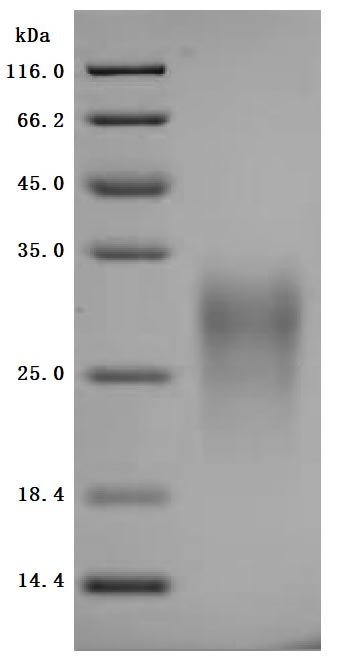
Greater than 95% as determined by SDS-PAGE.
Endotoxin
Less than 1.0 EU/ug as determined by LAL method.
Activity
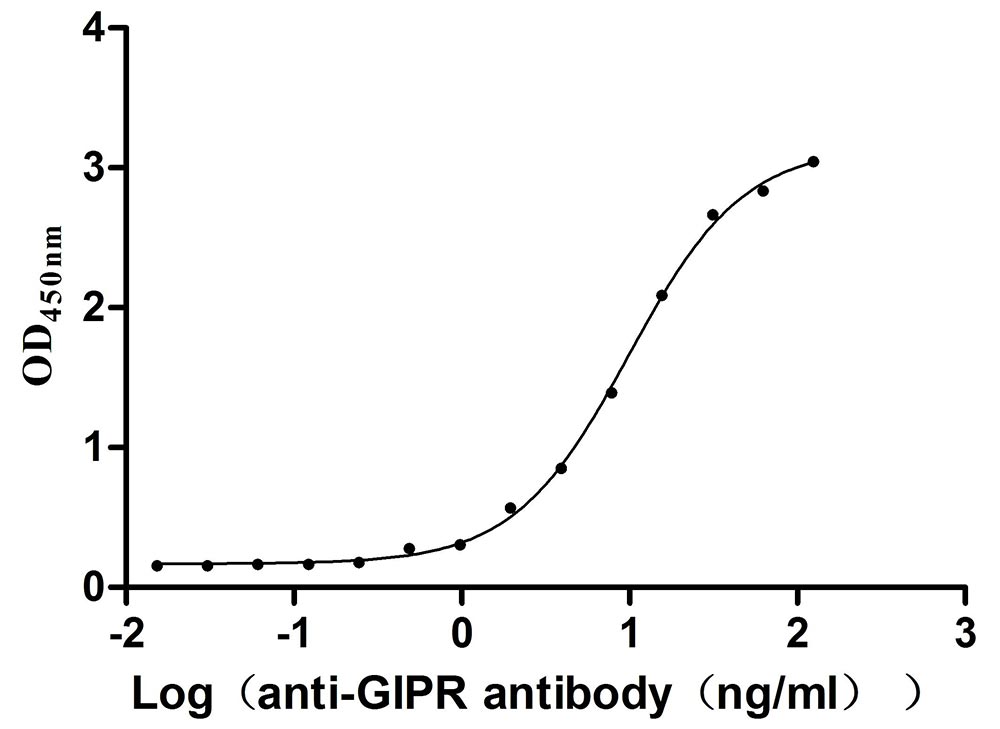
Measured by its binding ability in a functional ELISA. Immobilized Mouse Gipr at 2 μg/mL can bind Anti-Mouse Gipr Recombinant Antibody (CSB-RA009438MA1MO), the EC50 is 8.622-11.36 ng/ml.
Target Names
Gipr
Uniprot NO.
Alternative Names
Gastric inhibitory polypeptide receptor;GIP-R;Glucose-dependent insulinotropic polypeptide receptor;Gipr
Species
Mus musculus (Mouse)
Source
Mammalian cell
Expression Region
19-134aa
Target Protein Sequence
ETDSEGQTTTGELYQRWEHYGQECQKMLETTEPPSGLACNGSFDMYACWNYTAANTTARVSCPWYLPWFRQVSAGFVFRQCGSDGQWGSWRDHTQCENPEKNGAFQDQTLILERLQ
Mol. Weight
14.7 kDa
Protein Length
Partial
Tag Info
C-terminal 10xHis-tagged
Buffer
Lyophilized from a 0.2 μm filtered PBS, 6% Trehalose, pH 7.4
Storage
Store at -20°C/-81°C upon receipt, aliquoting is necessary for mutiple use. Avoid repeated freeze-thaw cycles.
Lead Time
3-7 business days
Notes
Repeated freezing and thawing is not recommended. Store working aliquots at 4°C for up to one week.
Shelf Life
The shelf life is related to many factors, storage state, storage temperature and the stability of the product itself. Generally, the shelf life of lyophilized form is 6 months at -20°C/-80°C from the date of receipt.
Troubleshooting and FAQs
Datasheet & COA
Please contact us to get it.
Images
  • (Tris-Glycine gel) Discontinuous SDS-PAGE (reduced) with 5% enrichment gel and 15% separation gel.
  • Activity
    Measured by its binding ability in a functional ELISA. Immobilized Mouse Gipr at 2μg/mL can bind Anti-Mouse Gipr recombinant antibody (CSB-RA009438MA1MO), the EC50 is 8.622-11.36 ng/mL.
Description

The gene sequence encoding amino acids 19 to 134 of the mouse gastric inhibitory polypeptide receptor (Gipr) is combined with a 10xHis-tag gene sequence at its C-terminus and then integrated into a plasmid vector. This recombinant vector is introduced into mammalian cells, and the cells that have been transfected are carefully selected and cultured to facilitate the expression of the protein. The recombinant mouse Gipr protein is isolated from the cell lysate. This protein's purity surpasses 95%, as determined using SDS-PAGE analysis, and its endotoxin content is less than 1.0 EU/μg as assessed by the LAL method. The functional capacity of the protein is affirmed through a functional ELISA test. When immobilized at a concentration of 2 μg/mL, the mouse Gipr protein effectively binds with the anti-Mouse Gipr recombinant antibody (CSB-RA009438MA1MO), with an EC50 of ranging from 8.622 to 11.36 ng/ml.

Gipr has a widespread distribution in the body, being expressed in organs like the pancreas, stomach, small intestine, adipose tissue, heart, and brain tissue, where many cells directly or indirectly control body weight. Activating the GIP-Gipr signaling pathway not only stimulates the secretion of insulin and glucagon-like peptide-1 but also promotes the proliferation and survival of pancreatic β-cells, playing a significant role in blood glucose regulation. The Gipr gene polymorphism is associated with elevated BMI and increased visceral fat content in the body. The mouse Gipr shares about 83% homology with the human Gipr, with relatively similar structure and function. Developing drugs to treat obesity is one of the most promising directions currently. Most of these processes require validation in preclinical mouse animal models, making the preparation of active mouse Gipr protein essential. Therefore, preparing the mouse Gipr contributes to the development of drugs with cross-species reactivity and further aid in clinical drug research and development.

Customer Reviews and Q&A

 Customer Reviews

Target Background

Function
This is a receptor for GIP. The activity of this receptor is mediated by G proteins which activate adenylyl cyclase.
Gene References into Functions
  1. The study provides evidence that the insulinotropic action of zfGIP in mammalian systems involves activation of both the GLP-1 and the GIP receptors but not the glucagon receptor PMID:29157578
  2. Microarray analysis revealed that pregnancy-specific glycoprotein 17 (Psg17), a potential CD9-binding partner, was significantly decreased in GIP receptor-knockout (Gipr-/-) testes. PMID:28430907
  3. GIPR signaling in adipose tissue plays a critical role in high fat diet-induced insulin resistance and hepatic steatosis in vivo, which may involve IL-6 signaling. PMID:28096257
  4. Genetic deletion of both GLP-1 and GIP receptors reveals that they are required to maintain an adequate islet number in adulthood and to maintain normal beta cell responses to glucose. PMID:27020250
  5. Results suggest the beneficial effects of glucose-dependent insulinotropic polypeptide on periodontal disease. PMID:27181102
  6. Gipr(-/-) offspring of mice exposed to high fat diet(HFD) during pregnancy/lactation became insulin resistant and obese and exhibited increased adipose tissue inflammation and decreased peripheral tissue substrate utilization after reintroduction of HFD. PMID:26631738
  7. Beta-cell Gipr KO mice exhibit lower levels of meal-stimulated insulin secretion, decreased expansion of adipose tissue mass and preservation of insulin sensitivity and decreased TCF1 expression. PMID:26642437
  8. Gipr is expressed in healthy arteries, predominantly in endothelial cells. PMID:26395740
  9. These data highlighted the importance of intact GIPR signalling and dietary composition in modulating memory and learning, and hippocampal pathways involved in the maintenance of synaptic plasticity PMID:25760229
  10. Functional GIP receptors play a major role in islet compensatory response to high fat feeding in mice. PMID:25688757
  11. our data demonstrate that the expression of GLP-1R and GIPR is regulated by glucose concentrations in MC3T3-E1 cells undergoing differentiation induced by BMP-2. PMID:24866833
  12. Results show that GIPR undergoes trafficking between the plasma membrane and intracellular compartments of both GIP-stimulated and unstimulated adipocytes. PMID:25047836
  13. Structural and pharmacological characterization of novel potent and selective monoclonal antibody antagonists of glucose-dependent insulinotropic polypeptide receptor. PMID:23689510
  14. a role of the adipocyte GIPr in nutrient-dependent regulation of body weight and lean mass, but it does not support a direct and independent role for the adipocyte or beta-cell GIPr in promoting adipogenesis. PMID:22027838
  15. Gipr is essential for adrenal steroidogenesis and links high fat (HF) feeding to increased levels of corticosterone, reduced glucocorticoid levels do not significantly contribute to the enhanced metabolic phenotypes in HF-fed Gipr(-/-) mice. PMID:22043004
  16. GIPR(dn) transgenic mice show a disturbed expansion of the endocrine pancreas, due to perturbed islet neogenesis. PMID:21818396
  17. GIP receptors play an important role in cognition, neurotransmission, and cell proliferation. PMID:21273318
  18. Both GIPR protein and mRNA expression increased during cell differentiation, and this increase was associated with upregulation of nuclear levels of SREBP-1c and PPARgamma, as well as acetylation of histones H3/H4. PMID:21245029
  19. GIPR(-/-) mice exhibit altered islet structure and topography and increased islet sensitivity to glucagon-like peptide-1 despite a decrease in pancreatic insulin content and gene expression PMID:12540373
  20. Results demonstrate that glucose intolerance was additively increased during oral glucose absorption when both gastric inhibitory polypeptide receptors and glucagon-like peptide 1 receptors were inactivated. PMID:14966573
  21. intact signaling of G-protein coupled receptors is involved in postnatal islet and beta-cell development and neogenesis of the pancreatic islets PMID:15582721
  22. Adult GIP receptor knock-out mice exhibit a significantly lower number of newborn cells in the hippocampal dentate gyrus compared with wild-type mice. PMID:15716418
  23. long term activation of the GIP receptor by daily treatment with N-AcGIP(LysPAL37) improved glucose tolerance due to enhancement of pancreatic beta cell glucose responsiveness and insulin secretion. PMID:16181707
  24. Both incretins secretion depends on mechanisms involving their own receptors and GLP-1 further requires GLUT2. PMID:17681422
  25. relative reduction of truncated GIPR expression may be involved in hypersensitivity of GIPR and hyperinsulinemia in diet-induced obese mice PMID:17971513
  26. Double incretin receptor knockout mice exhibit enhanced insulin action compared with wild-type mice when fed a regular diet and are protected from high-fat diet-induced obesity and insulin resistance. PMID:17977951
  27. Gastric inhibitory peptide receptor interacts with estrogens in the hypothalamic regulation of food intake in mice. PMID:18505834
  28. Results suggest that activation of the gastric inhibitory polypeptide receptor can improve diabetes control in high-fat-fed mice. PMID:19073224
  29. Analyses with GIPR-deficient mice suggest a role of GIP/GIPR signal transduction in promoting spontaneous recovery after nerve crush; injury of GIPR-deficient mouse sciatic nerve revealed impaired axonal regeneration. PMID:19170165
  30. Report differential importance of glucose-dependent insulinotropic polypeptide vs glucagon-like peptide 1 receptor signaling for beta cell survival in mice. PMID:19766644

Show More

Hide All

Subcellular Location
Cell membrane; Multi-pass membrane protein.
Protein Families
G-protein coupled receptor 2 family
Database Links
icon of phone
Call us
301-363-4651 (Available 9 a.m. to 5 p.m. CST from Monday to Friday)
icon of address
Address
7505 Fannin St., Ste 610, Room 7 (CUBIO Innovation Center), Houston, TX 77054, USA
icon of social media
Join us with

Subscribe newsletter

Leave a message

* To protect against spam, please pass the CAPTCHA test below.
CAPTCHA verification
© 2007-2025 CUSABIO TECHNOLOGY LLC All rights reserved. 鄂ICP备15011166号-1
Select 0 Products