* Sample kit cost can be deducted as a $30 credit for each 96-assay kit of the same analyte and brand you subsequently purchase within six months until depleted. More details >>
Interested in a trial size? Please leave a message below.

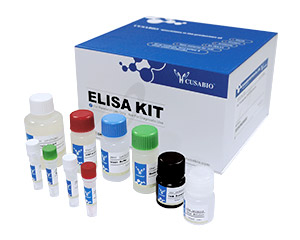
This ELISA kit provides quantitative measurement of total IgG in human samples, supporting research into humoral immune responses, antibody production, and immunoglobulin dysregulation. Because IgG concentrations vary dramatically — from mg/mL levels in serum to trace amounts in urine or cell culture supernates from antibody-secreting cells — this kit is designed to accommodate that biological range with appropriate sample planning.
Detection Range: The 0.195–50 μg/mL range sits well below normal serum IgG concentrations (7,000–16,000 μg/mL), meaning serum and plasma samples require significant dilution (typically 1:500–1:10,000), which researchers should factor into protocol design. Undiluted or minimally diluted cell culture supernates and urine samples, where IgG is far less concentrated, fall more directly within range.
Sensitivity: At 0.0975 μg/mL, the kit detects IgG in low-abundance matrices such as conditioned media from in vitro-differentiated plasmablasts, urine from patients with early glomerular damage, and dilute tissue homogenates where immunoglobulin infiltration is being assessed.
Sample Compatibility: Validation across serum, plasma, cell culture supernates, urine, and tissue homogenates enables integrated study designs linking circulating IgG levels with local tissue deposition and in vitro B cell functional output.
Assay Efficiency: Requiring only 50–100 μL per well with 1–5 hour completion, the kit accommodates limited-volume samples from longitudinal bleeds or primary B cell cultures without sacrificing throughput.
This kit is particularly suited for studies of hypogammaglobulinemia, monoclonal gammopathies, and vaccine-induced humoral immunity.


Email: support@cusabio.com
Distributors Worldwide



